
Understanding planetary gearbox gear ratio is essential for any engineer selecting a drive system. This guide breaks down the formula, explains every configuration, and walks through real calculations so you can confidently size a planetary gearbox for any application.
Introduction
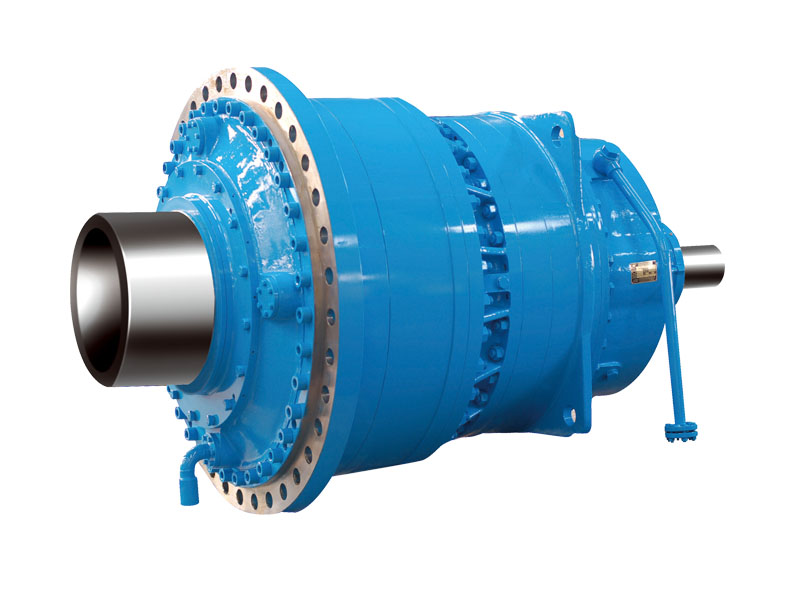
The planetary gearbox gear ratio is one of the most important parameters in mechanical power transmission. Get it right, and your motor delivers exactly the torque and speed your machine needs. Get it wrong, and you face overloaded components, premature wear, or a system that simply cannot do its job.
Despite its reputation for complexity, calculating the planetary gearbox gear ratio follows a clear, repeatable process once you understand the basic architecture. Unlike a simple two-gear system where ratio equals the tooth count of the output gear divided by the input gear, a planetary gearbox involves three interacting components — the sun gear, the planet gears, and the ring gear — any one of which can serve as the input, output, or fixed element depending on the design.
This guide walks you through everything you need: the fundamental formula, the three main fixed-component configurations, multi-stage compound ratios, practical worked examples, and common mistakes to avoid. Whether you are an experienced mechanical engineer or a technical buyer evaluating specifications, this step-by-step breakdown will give you a solid command of planetary gearbox gear ratio calculation.
1. Understanding the Planetary Gearbox Architecture
Before diving into calculations, it is worth establishing a clear picture of the components involved. Every planetary gearbox — regardless of size, brand, or application — contains the same three core elements:
1.1 The Sun Gear
The sun gear sits at the center of the assembly and meshes with all planet gears simultaneously. It is typically the smallest gear in the system and rotates about the central axis. In the most common configuration, the sun gear serves as the input — connected directly to the motor shaft.
1.2 The Planet Gears
Planet gears are a set of identical gears (typically three or four) arranged symmetrically around the sun gear. Each planet gear meshes with both the sun gear and the ring gear at the same time. The planet gears are mounted on a rotating carrier (also called the planet carrier or cage), which allows them to revolve around the sun gear while also spinning on their own axes.
1.3 The Ring Gear (Annulus)
The ring gear is the outermost component, featuring internal teeth that mesh with the planet gears. It surrounds the entire planet-sun assembly. In many configurations, the ring gear is fixed to the gearbox housing and does not rotate.
1.4 The Planet Carrier
The planet carrier holds the axles of all planet gears at a fixed radial distance from the sun gear. When the planet gears revolve around the sun gear (rather than just spinning in place), the carrier rotates with them. In many configurations, the planet carrier serves as the output shaft.
Understanding these four elements — sun gear, planet gears, ring gear, and carrier — is the foundation for every planetary gearbox gear ratio calculation that follows.
2. The Fundamental Planetary Gear Formula
The mathematical relationship between the components of a planetary gearbox is expressed through the fundamental planetary gear equation, sometimes called the Willis equation:NrNs=ωr−ωcωs−ωc
Where:
| Symbol | Meaning |
|---|---|
| N_s | Number of teeth on the sun gear |
| N_r | Number of teeth on the ring gear |
| ω_s | Angular velocity of the sun gear |
| ω_r | Angular velocity of the ring gear |
| ω_c | Angular velocity of the carrier |
This single equation governs all possible operating modes of a planetary gearbox. By fixing one of the three rotating elements (setting its angular velocity to zero) and defining one as the input, the equation solves directly for the planetary gearbox gear ratio of the third element as the output.
2.1 The Simplified Tooth-Count Ratio
For practical gear ratio calculations, engineers frequently use a simplified version based on tooth counts:α=NsNr
This ratio α (alpha) is the fundamental building block of all planetary gearbox gear ratio calculations. It represents how many times larger the ring gear is than the sun gear in terms of tooth count. A typical value of α ranges from 2 to 5 in industrial planetary gearboxes, though values outside this range are possible for specialized designs.
Note: Planet gear tooth count does not appear directly in the gear ratio formula. Planet gears act as idlers that transmit force between the sun and ring gears without affecting the overall ratio — though their tooth count must satisfy the geometric assembly condition for the gearbox to be physically buildable.
3. The Three Main Configurations and Their Gear Ratios
The configuration of a planetary gearbox — meaning which element is fixed, which is the input, and which is the output — determines the resulting planetary gearbox gear ratio. There are three primary configurations used in practice.
3.1 Configuration 1: Fixed Ring Gear (Most Common)
Setup: Ring gear fixed | Sun gear = Input | Carrier = Output
This is by far the most widely used planetary gearbox configuration in industrial, robotic, and automotive applications. The ring gear is bolted to the housing and cannot rotate. The motor drives the sun gear, and the output is taken from the planet carrier.
Gear Ratio Formula:i=1+NsNr=1+α
Characteristics:
- Output rotates in the same direction as the input
- Always produces a speed reduction (ratio > 1)
- Typical ratio range: 3:1 to 12:1 per stage
- Most compact and efficient configuration
Example:
- Sun gear teeth: 20
- Ring gear teeth: 80
- α = 80 / 20 = 4
- Gear ratio = 1 + 4 = 5:1
At a 5:1 ratio, if the motor runs at 3,000 RPM, the output shaft runs at 600 RPM, while output torque (before efficiency losses) is multiplied by a factor of 5.
3.2 Configuration 2: Fixed Sun Gear
Setup: Sun gear fixed | Ring gear = Input | Carrier = Output
In this configuration, the sun gear is locked to the housing. The ring gear is driven by the motor, and the output is taken from the carrier. This arrangement is less common in standard gearboxes but appears in certain automotive automatic transmissions and specialized industrial drives.
Gear Ratio Formula:i=α+1α=Nr+NsNr
Characteristics:
- Output rotates in the same direction as the input
- Produces a speed reduction, but a smaller ratio than Configuration 1
- Typical ratio range: 1.2:1 to 1.6:1 per stage
- Used when a small reduction ratio is needed within a compact envelope
Example:
- Sun gear teeth: 20
- Ring gear teeth: 80
- α = 80 / 20 = 4
- Gear ratio = 4 / (4 + 1) = 0.8:1
Wait — a ratio less than 1 means speed increase? Correct. When using the same tooth counts but fixing the sun gear and driving the ring gear, this configuration actually acts as an overdrive (speed increaser). To use it as a reducer, you would input via the carrier and output via the ring gear.
3.3 Configuration 3: Fixed Carrier
Setup: Carrier fixed | Sun gear = Input | Ring gear = Output
When the planet carrier is locked and cannot revolve, the planet gears become simple idler gears transmitting rotation between the sun and ring gears. This transforms the planetary gearbox into a functional equivalent of a simple internal gear pair.
Gear Ratio Formula:i=−NsNr=−α
Characteristics:
- Output rotates in the opposite direction to the input (hence the negative sign)
- Ratio equals simply α
- Typical ratio range: 2:1 to 5:1 per stage
- Rarely used in standard industrial gearboxes due to output direction reversal
Example:
- Sun gear teeth: 20
- Ring gear teeth: 80
- Gear ratio = −(80 / 20) = −4:1
The negative sign indicates output direction reversal. In most industrial applications where direction consistency is required, this configuration is avoided unless the reversal is specifically desired.
4. Summary Table: All Three Configurations
| Configuration | Fixed Element | Input | Output | Ratio Formula | Direction | Typical Range |
|---|---|---|---|---|---|---|
| Standard Reduction | Ring gear | Sun | Carrier | 1 + α | Same | 3:1 – 12:1 |
| Small Reduction | Sun gear | Ring | Carrier | α / (α + 1) | Same | 1.2:1 – 1.6:1 |
| Reverse Reduction | Carrier | Sun | Ring | −α | Opposite | 2:1 – 5:1 |
5. Multi-Stage Planetary Gearbox Gear Ratio Calculation
When a single planetary stage cannot deliver the required reduction — for example, when a ratio of 25:1 or 100:1 is needed — two or more planetary stages are connected in series. This is known as a compound or multi-stage planetary gearbox.
5.1 The Compound Ratio Formula
The total planetary gearbox gear ratio of a multi-stage unit is the product of the individual stage ratios:itotal=i1×i2×i3×…×in
This multiplication effect is why compound planetary gearboxes can achieve very high ratios in a relatively compact package.
5.2 Two-Stage Example
A two-stage planetary gearbox has:
- Stage 1: Sun = 18 teeth, Ring = 72 teeth
- Stage 2: Sun = 24 teeth, Ring = 96 teeth
Both stages use Configuration 1 (fixed ring gear).
Step 1 — Calculate Stage 1 ratio:α1=1872=4⇒i1=1+4=5
Step 2 — Calculate Stage 2 ratio:α2=2496=4⇒i2=1+4=5
Step 3 — Calculate total ratio: $$i_{total} = 5 \times 5 = \textbf{25:1}$$
5.3 Three-Stage Example
A three-stage gearbox with ratios of 4:1, 5:1, and 6:1:
$$i_{total} = 4 \times 5 \times 6 = \textbf{120:1}$$
Common three-stage planetary gearboxes achieve ratios from 64:1 up to 512:1 or higher, depending on the individual stage configurations chosen.
5.4 Choosing Stage Ratios Wisely
When designing or specifying a multi-stage planetary gearbox, distributing the ratio load evenly across stages generally produces a more compact and efficient result than stacking one very high-ratio stage with low-ratio stages. As a practical guideline:
- Two-stage units typically cover ratios from 9:1 to 100:1
- Three-stage units typically cover ratios from 64:1 to 512:1
- Four-stage units are available for extreme ratio requirements exceeding 1,000:1
6. Accounting for Efficiency in Gear Ratio Calculations
The planetary gearbox gear ratio tells you the speed relationship between input and output. But for torque and power calculations, you must also account for efficiency losses.
6.1 Efficiency Per Stage
A well-manufactured planetary gearbox stage typically achieves 97–99% efficiency under rated load conditions, depending on bearing quality, lubrication, manufacturing tolerances, and operating speed. This is one of the key advantages of planetary designs over worm gearboxes, which can have efficiencies as low as 50–70%.
6.2 Output Torque Calculation
The theoretical output torque (ignoring losses) is:Tout=Tin×i
With efficiency factored in:Tout=Tin×i×η
Where η is the gearbox efficiency expressed as a decimal (e.g., 0.97 for 97%).
Example:
- Input torque: 10 Nm
- Gear ratio: 25:1
- Efficiency: 97% (two-stage unit)
Tout=10×25×0.97=242.5 Nm
6.3 Multi-Stage Efficiency
For a multi-stage gearbox, multiply the individual stage efficiencies:ηtotal=η1×η2×η3
A three-stage unit at 98% per stage delivers:ηtotal=0.98×0.98×0.98=0.941=94.1%
This means approximately 5.9% of input power is lost as heat — still far superior to most alternative gearbox types at comparable ratios.
7. Real-World Worked Example: Sizing a Planetary Gearbox
Let’s apply everything above to a realistic engineering scenario.
Problem Statement
You are selecting a planetary gearbox for a servo motor driving a conveyor axis. The requirements are:
- Motor rated speed: 3,000 RPM
- Required output speed: 120 RPM
- Required output torque: 180 Nm
- Motor rated torque: 8 Nm
- Space constraint: maximum two stages
Step 1 — Determine Required Gear Ratio
$$i = \frac{N_{input}}{N_{output}} = \frac{3000}{120} = \textbf{25:1}$$
Step 2 — Verify Torque Sufficiency
Theoretical output torque at 25:1 with 97% efficiency:Tout=8×25×0.97=194 Nm
194 Nm > 180 Nm required — the motor and gearbox combination meets the torque requirement with margin. ✓
Step 3 — Select Stage Configuration
A two-stage planetary gearbox with 5:1 per stage delivers 5 × 5 = 25:1 total. This is a standard catalogue ratio available from most planetary gearbox manufacturers, making sourcing straightforward.
Step 4 — Confirm Direction
Both stages use Configuration 1 (fixed ring gear), so output rotates in the same direction as the motor. No direction reversal. ✓
Step 5 — Verify Thermal Rating
At 3,000 RPM input and 180 Nm output demand, confirm with the manufacturer’s catalogue that the selected frame size is rated for the continuous thermal power at this operating point. This step is often overlooked but is critical for long service life.
8. Common Mistakes in Planetary Gearbox Gear Ratio Calculation
Even experienced engineers occasionally make errors when working with planetary gearbox gear ratio calculations. The most frequent mistakes include:
8.1 Confusing Tooth Count with Ratio Directly
The ratio is not simply N_ring / N_sun for a standard configuration. It is 1 + (N_ring / N_sun). Forgetting the “+1” term is the single most common calculation error, and it produces a ratio that is always one unit lower than the correct value.
Wrong: i = N_r / N_s = 80 / 20 = 4 Correct: i = 1 + (N_r / N_s) = 1 + 4 = 5
8.2 Ignoring the Fixed Element
The gear ratio formula changes completely depending on which element is fixed. Always identify the fixed element first before applying any formula.
8.3 Multiplying When You Should Add
Multi-stage ratios are multiplied, not added. Two stages of 5:1 give 25:1, not 10:1.
8.4 Neglecting Efficiency in Torque Calculations
Using the theoretical torque multiplication without accounting for efficiency losses leads to undersized output shafts and overloaded bearings. Always apply the efficiency factor when calculating actual output torque.
8.5 Misreading Manufacturer Datasheets
Some manufacturers publish the gear ratio as the reduction ratio (e.g., 5:1 means the output turns at 1/5 the input speed), while others publish it as a multiplication ratio (e.g., 0.2 means the same thing). Always confirm the convention used in the datasheet before applying the number.
9. Planetary Gearbox Gear Ratio vs. Other Gearbox Types
Understanding how planetary gearbox gear ratio characteristics compare to other common gearbox types helps engineers make informed selection decisions.
| Parameter | Planetary Gearbox | Parallel Shaft (Helical) | Worm Gearbox |
|---|---|---|---|
| Ratio per stage | 3:1 – 12:1 | 1.5:1 – 7:1 | 5:1 – 100:1 |
| Max ratio (3 stages) | Up to 512:1 | Up to 343:1 | Up to 100:1 (single stage) |
| Efficiency per stage | 97–99% | 96–99% | 50–90% |
| Coaxial design | Yes | No | No |
| Torque density | Very high | Medium | Medium |
| Backlash | Low (precision types < 1 arcmin) | Medium | High |
For applications requiring high torque density, coaxial input/output alignment, and high efficiency across a wide ratio range, planetary gearboxes consistently outperform alternative designs — which explains their dominance in robotics, servo drives, and precision automation.
10. Frequently Asked Questions
What is a typical planetary gearbox gear ratio range?
Single-stage planetary gearboxes typically offer ratios from 3:1 to 10:1. Two-stage units cover approximately 9:1 to 100:1, and three-stage units extend the range to 512:1 or beyond.
Can a planetary gearbox be used as a speed increaser?
Yes. By reversing the input and output assignments — driving the carrier and taking output from the sun gear with a fixed ring gear — a planetary gearbox acts as a speed increaser. The ratio is the reciprocal of the reduction ratio: a 5:1 reducer becomes a 1:5 increaser when reversed.
Does planet gear tooth count affect the planetary gearbox gear ratio?
No. Planet gear tooth count does not appear in the gear ratio formula. It affects load sharing, contact ratio, and assembly geometry, but not the kinematic ratio between input and output.
How do I verify a manufacturer’s stated gear ratio?
Ask the manufacturer for the sun and ring gear tooth counts. Apply the formula for the stated configuration (typically i = 1 + N_r/N_s for a standard fixed-ring unit) and confirm the result matches the published ratio. For multi-stage units, verify each stage separately and multiply.
What is the difference between gear ratio and reduction ratio?
The terms are often used interchangeably. Strictly speaking, gear ratio is the ratio of output speed to input speed (or input to output — conventions vary), while reduction ratio specifically implies speed reduction. For a 5:1 reduction: input is 5× faster than output, and output torque is (ideally) 5× the input torque.
Conclusion
Calculating the planetary gearbox gear ratio is straightforward once you grasp three things: the component architecture (sun, planets, ring, carrier), the correct formula for the chosen fixed-element configuration, and the multiplication rule for multi-stage units. The most common industrial configuration — fixed ring gear, sun input, carrier output — uses the simple formula i = 1 + (N_r / N_s), giving a reliable reduction ratio between 3:1 and 12:1 per stage.
For complex applications requiring high ratios or precise torque matching, working through the step-by-step calculation process outlined in this guide — determining required ratio, selecting stage configuration, verifying torque with efficiency factored in, and confirming thermal limits — ensures you select the right planetary gearbox gear ratio for the job the first time.
If you are evaluating catalogue gearboxes, always cross-check the manufacturer’s stated ratio against the tooth count data using the formulas above. It takes two minutes and eliminates the risk of a costly specification error.
Quick Reference: Planetary Gearbox Gear Ratio Formulas
| Configuration | Formula | Notes |
|---|---|---|
| Fixed ring, sun→carrier | i = 1 + (N_r / N_s) | Most common; same direction |
| Fixed sun, ring→carrier | i = N_r / (N_r + N_s) | Small reduction or overdrive |
| Fixed carrier, sun→ring | i = −(N_r / N_s) | Direction reversal |
| Multi-stage total ratio | i = i₁ × i₂ × i₃ | Multiply, do not add |
| Output torque (with efficiency) | T_out = T_in × i × η | Always include η |