
Gear Motor Maintenance: Advanced Strategies for Longevity & Reliability
The geared motor unit is a critical executing component in industrial automation processes, and its reliability directly dictates the overall equipment effectiveness (OEE) of the production line. However, in high-intensity, continuous industrial settings, many enterprises still rely on a reactive “failure-repair” maintenance paradigm. This approach incurs substantial downtime costs and drastically limits the asset’s service life. Effective gear motor maintenance must be proactive.
This expert guide, written from the perspective of an asset reliability engineer, aims to analyze the four core technical elements that influence gear motor longevity. Ultimately, we build a long-term operating strategy based on Predictive Maintenance (PdM) and Life Cycle Cost (LCC) considerations.
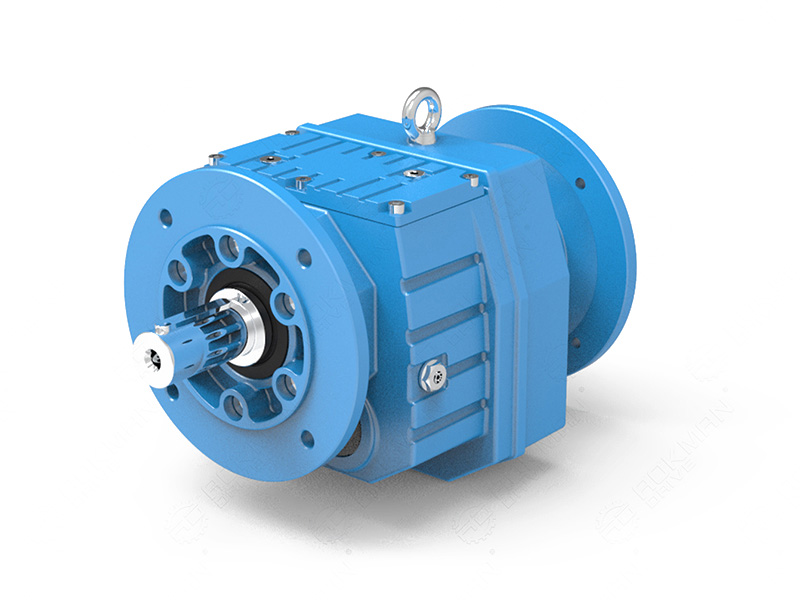
1. Advanced Tribology: Essential for Gear Motor Longevity
Lubricating oil performs a triple function in a gear drive system: it reduces friction, dissipates heat, and prevents corrosion. Lubrication failure, whether due to film rupture, contamination, or chemical degradation, is the primary cause of premature fatigue in mechanical components, especially bearings and gears. In fact, authoritative data indicates that over 40% of rotating equipment failures directly trace back to uncontrolled lubrication practices.
1.1 Lubricant Selection: Viscosity and Additive Matching Based on EHL Theory
EHL Film Thickness Ratios and Gear Protection
First, engineers must select the correct lubricant to ensure the EHL film separates the gear teeth and rolling elements under actual operating temperatures and loads. The target is to maintain a film thickness ratio $\lambda = h / \sigma > 3$. Conversely, when $\lambda < 1$, metal-to-metal contact accelerates, leading to surface fatigue and micropitting.
Advanced Additive Packages and Thermal Stability
- Extreme Pressure (EP) Agents: These are essential for high-load, low-speed, or shock-loaded conditions. EP additives form a sacrificial film on metal surfaces, preventing micro-welding when the primary oil film momentarily collapses.
- Antioxidants and Thermal Limits: In high-temperature environments (oil temperature exceeding $80^{\circ}C$), the rate of oil oxidation increases exponentially. Therefore, utilizing synthetic base stocks (PAO or esters) with robust antioxidant packages is the technical imperative for extended drain intervals, sometimes quadrupling the life compared to mineral oils.
1.2 Comprehensive Contamination Control and Oil Analysis
ISO 4406 and Particle Counting Thresholds
The target cleanliness level should be 16/14/11 or better for critical assets. Furthermore, oil analysis must include Inductively Coupled Plasma (ICP) spectrometry to track wear metals (Fe, Cu, Pb) and contaminants (Si).
Oil Degradation Metrics (TAN and Water Content)
- Total Acid Number (TAN): Monitor the TAN to track oil degradation. An increase of 1.0 mg KOH/g above the new oil value often signals end-of-life due to oxidation.
- Water Content: Water is highly detrimental. It causes rust and depletes anti-wear additives. Consequently, water content should never exceed 100 ppm for systems using synthetic gear oils.
Technical Implementation of Desiccant Breathers
Crucially, in wet or dusty environments, utilize desiccant breathers with dual-filtration structures. The built-in silica gel effectively lowers the oil’s moisture content to below $100$ ppm, guaranteeing the chemical stability of the lubricant from the source.
2. Mechanical Integrity: Eliminating Dynamic Loads through Precision Installation
Mechanical stress is the main cause of seal leakage and bearing cage fracture. Often, what appears as a “motor quality issue” actually roots in a lack of installation precision.
2.1 Housing Rigidity, Base Flatness, and “Soft Foot” Correction
The Necessity of Soft Foot Elimination
Soft Foot occurs when a gear motor’s mounting feet do not sit coplanar on the baseplate. Tightening the anchor bolts forces strain into the housing, leading to distortion of the gearbox casing. For this reason, any distortion compromises the internal alignment of the gear mesh and bearings.
Correction Protocol
Laser measurement systems or feeler gauges must detect Soft Foot. Subsequently, permanent correction using precision shims must be applied to any gap exceeding $0.05$ mm before final alignment is performed.
2.2 Laser Precision Alignment, Coupling Selection, and Balance
Thermal Growth Compensation
Equipment’s geometric center shifts from cold start to thermal steady-state due to material expansion. Consequently, alignment technicians must use the manufacturer’s specified thermal offset values to pre-align the machine, thus ensuring optimal alignment when the unit reaches operating temperature.
Coupling Balance
For high-speed input shafts (over 3600 RPM), ensure the coupling is balanced to ISO Grade G2.5 or better. Unbalanced couplings introduce vibration and unnecessary radial forces.
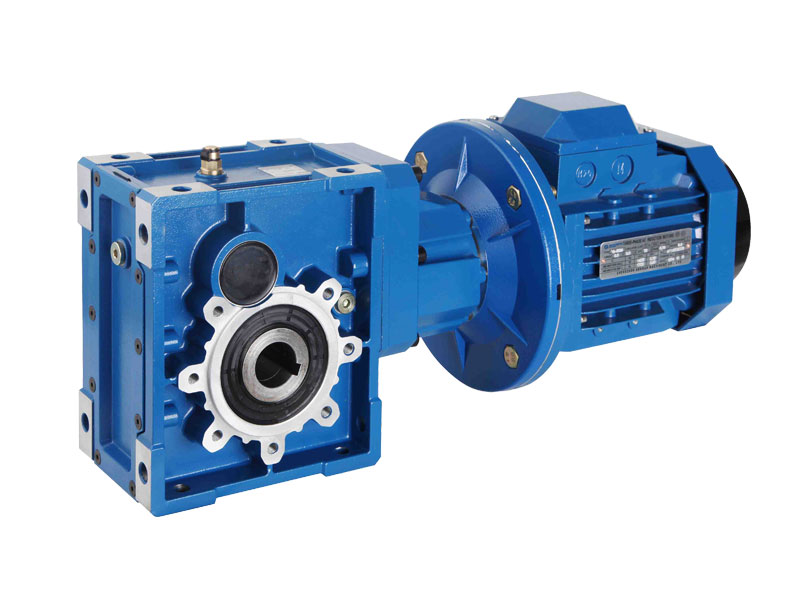
3. Electrical Protection and Thermodynamic Constraints
For integrated motor units, the motor’s electrical health critically impacts the reliability of the entire drive system.
3.1 VFD-Induced Bearing Corrosion and Mitigation
EDM Mechanism and Voltage Threshold
High-frequency switching by VFDs creates Common Mode Voltage. When the shaft voltage exceeds the lubricant film’s dielectric strength (typically $10$ VDC or $20$ Vp-p peak), current discharges through the bearing, causing pitting and “fluting.”
Technical Solution
Specifically, protect motors driven by VFDs by installing Carbon Fiber Shaft Grounding Rings (SGRs) on the non-drive end, or by utilizing insulated or ceramic hybrid bearings. These devices provide a low-impedance path to ground that bypasses the rolling elements.
3.2 Heat Dissipation Efficiency and Insulation Management
Application of the Arrhenius Law
For Class B insulation, every $10^{\circ}C$ of sustained over-temperature operation reduces the insulation life by $50\%$. Therefore, controlling shell and winding temperatures is crucial.
Maintenance Action
For instance, use Infrared Thermography periodically to swiftly identify localized hotspots caused by restricted airflow or excessive internal friction. Furthermore, schedule the regular cleaning of cooling fins.
4. Condition Based Monitoring (CBM) and Predictive Threshold Setting
Predictive Maintenance relies on using data trends, not fixed schedules, to guide intervention.
4.1 FFT Vibration Analysis for Fault Qualitative Assessment
Vibration Standards and Severity
Engineers must interpret the Fast Fourier Transform (FFT) spectrum to identify characteristic frequencies. Use the ISO 10816 standard to categorize vibration severity (e.g., a new unit should be in Zone A/B, while C/D requires immediate action). In general, a velocity limit of 2.8 mm/s RMS often acts as a key operational threshold for industrial gearboxes.
Alarm and Danger Thresholds
Establish clear Alert and Danger thresholds. Noticeably, the appearance of pronounced sidebands around the Gear Mesh Frequency (GMF) is a critical early warning sign of gear eccentricity or tooth damage.
4.2 Oil Wear Particle Analysis (Ferrography)
Particle Count and Morphology
Observing the morphology of wear particles determines the failure mode: Cutting Wear (sharp, indicating contaminants), Fatigue Wear (plate-like, signaling surface peeling), or Spherical Particles (indicating severe impact).
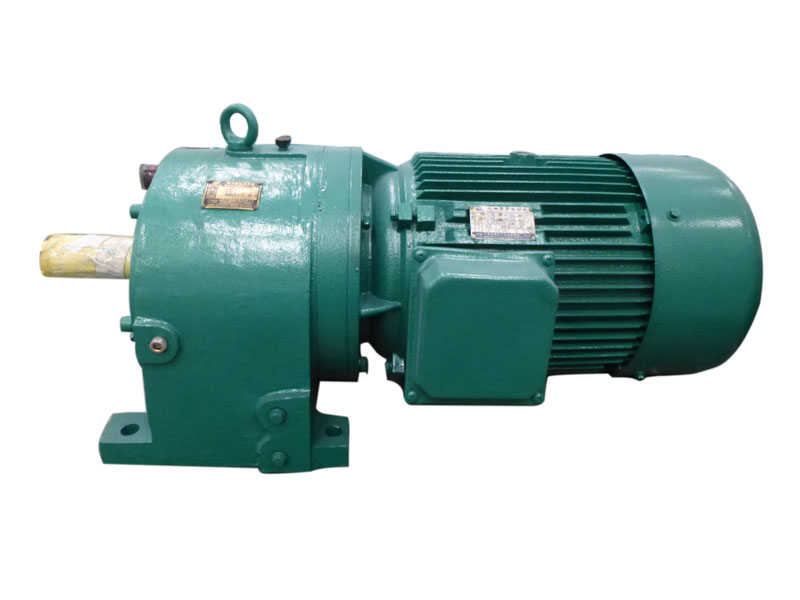
5. Technical Integration and Strategic Selection Upgrade Recommendation
Extending the gear motor service life requires the synergy between its inherent quality and the post-installation maintenance strategy.
5.1 Adopting the Life Cycle Cost (LCC) Perspective
LCC Model Insights
The initial purchase cost often accounts for only 20% to 30% of the total ownership cost. In contrast, the bulk of the expense resides in Operation, Maintenance, and Downtime.
Strategic Technical Imperative (Recommendation)
We strongly recommend investing in premium gear units designed under strict standards like AGMA 2004 or ISO 6336, utilizing precision ground gear teeth. Although these products have a higher initial cost, their inherently lower failure rates and higher efficiency significantly reduce the subsequent maintenance expenses.
The Case for High-Redundancy Engineering
As industry experts, we advocate for partnering with manufacturers who specialize in high-redundancy, customized solutions. These premium suppliers often provide gear motors pre-fitted with superior seals, higher Service Factors (SF $>1.4$ for continuous duty), and robust bearing seating tolerances. This approach is not merely purchasing a component; rather, it is acquiring a long-term reliability guarantee and represents the most strategic way to lower your overall LCC.
Summary: Elevating Maintenance to Reliability Engineering
Successful gear motor maintenance is a systemic process founded on data, standards, and professional knowledge. Specifically, enterprises can achieve a significant increase in equipment operational cycle by strictly controlling lubricant cleanliness and chemical stability, eliminating mechanical and electrical stresses through laser alignment and shaft current protection, and utilizing CBM tools to predict and preempt failures. Ultimately, integrating deep technical maintenance with superior initial asset selection is the definitive pathway to achieving the highest levels of asset reliability.
If you have any related questions, please feel free to contact us. We will provide you with free technical support.