
What is a Worm Screw Jack? Complete Technical Guide to Mechanical Lifting, Positioning, and Load Handling Systems
Introduction: Understanding Worm Screw Jack Technology
A worm screw jack, also commonly referred to as a worm gear screw jack, machine screw jack, or simply jackscrew, represents a fundamental mechanical device that converts rotational motion into precise linear motion for lifting, lowering, positioning, and holding heavy loads. This versatile mechanical actuator incorporates a worm gear mechanism consisting of a threaded worm shaft meshing with a worm wheel (worm gear) to create substantial mechanical advantage through speed reduction and torque multiplication.
The primary distinguishing characteristic of worm screw jack technology involves the self-locking capability inherent to worm gear design. Specifically, when drive input ceases, the system maintains load position without requiring continuous power or external braking mechanisms. This unique feature makes worm screw jacks particularly valuable for applications demanding secure load holding, including heavy equipment positioning, material handling systems, and industrial machinery adjustment.
Load capacities for worm screw jacks range from 100 kilograms for light-duty applications to 150 tons for heavy industrial configurations. Moreover, the compact footprint combined with high load-bearing capability enables implementation in space-constrained installations where other actuator types prove impractical. The global screw jacks market, valued at approximately 14.26 billion USD in 2024, demonstrates the essential role these mechanical devices play across manufacturing, construction, automotive, and aerospace sectors, with projected growth reaching 25.32 billion USD by 2034 at a 5.91% CAGR.
Fundamental Working Principles of Worm Screw Jacks
Worm Gear Mechanism and Mechanical Advantage
The worm screw jack operates on the principle of a worm gear set where a threaded worm shaft (similar to a screw thread) meshes at right angles with a worm wheel featuring mating teeth. When the worm rotates, it engages sequential teeth on the worm wheel causing rotation at significantly reduced speed. This speed reduction creates substantial mechanical advantage, enabling small input forces to generate large output forces capable of lifting heavy loads.
The gear ratio in worm gear systems typically ranges from 5:1 to 60:1, with higher ratios providing greater mechanical advantage at the expense of lifting speed. For example, a 20:1 ratio worm gear requires 20 revolutions of the input worm to produce one complete revolution of the worm wheel. Consequently, this dramatic speed reduction multiplies input torque proportionally, allowing compact motors or manual inputs to handle loads exceeding several tons.
Screw Thread and Linear Motion Conversion
Following the worm gear reduction, rotational motion transfers to a lifting screw (also called a spindle or lead screw) that converts rotation into linear travel. The lifting screw features precision threads engaging with a threaded nut assembly. As the screw rotates, thread engagement forces the screw to travel axially, creating the vertical or horizontal positioning motion required for load manipulation.
Thread pitch, defined as the distance traveled per complete rotation, determines travel speed and mechanical advantage. Specifically, finer thread pitches (smaller distances per revolution) provide greater mechanical advantage and holding force but slower travel speeds. Coarser pitches enable faster positioning at reduced mechanical advantage. Standard metric thread pitches following ISO metric thread standards for worm screw jacks range from 4mm to 24mm depending on load capacity and application requirements.
Self-Locking Characteristics
The self-locking property represents the most valuable characteristic of worm screw jack technology. This phenomenon occurs due to the friction angle relationship between the worm and worm wheel teeth. When the friction angle exceeds the lead angle of the worm thread, the system becomes self-locking, preventing backdriving even under full load.
Mathematically, self-locking occurs when the coefficient of friction between mating surfaces creates sufficient resistance to prevent reverse motion. Most worm screw jacks incorporate lead angles between 3° and 10°, well below the friction angle threshold ensuring reliable self-locking. Consequently, loads remain securely positioned without requiring continuous motor power, external brakes, or additional locking mechanisms. This characteristic proves essential for safety-critical applications including aircraft maintenance jacks, stage lifting platforms, and heavy machinery positioning systems.
Core Components and Design Architecture
Worm Gear Housing Assembly
The housing assembly contains the primary worm gear mechanism while providing structural support and environmental protection. Typically manufactured from cast iron, ductile iron, or aluminum alloy, the housing must withstand operational loads while maintaining precise component alignment. Furthermore, integral bearing supports position the worm shaft accurately ensuring proper tooth engagement and minimizing wear.
Modern housing designs incorporate multiple features enhancing functionality. Specifically, mounting flanges enable secure attachment to machinery frames or support structures. Lubrication ports facilitate initial filling and periodic oil changes maintaining proper gear mesh lubrication. Additionally, breather vents accommodate thermal expansion preventing pressure buildup that could compromise seals or force lubricant past gaskets.
Worm Shaft and Worm Wheel
The worm shaft features precisely machined helical threads engaging the worm wheel teeth. Typically manufactured from hardened alloy steel, the worm requires superior surface finish and dimensional accuracy maintaining efficient power transmission. Heat treatment processes including carburizing or through-hardening enhance wear resistance extending service life.The worm wheel, also called the worm gear, features teeth cut to precisely match the worm thread profile. Bronze alloys, as specified in AGMA worm gear standards, represent the most common worm wheel material due to excellent wear characteristics, good machinability, and adequate strength for most applications.. Moreover, the bronze-on-steel material combination provides favorable friction characteristics while the softer bronze preferentially wears, protecting the more expensive worm shaft.
Lifting Screw and Nut Assembly
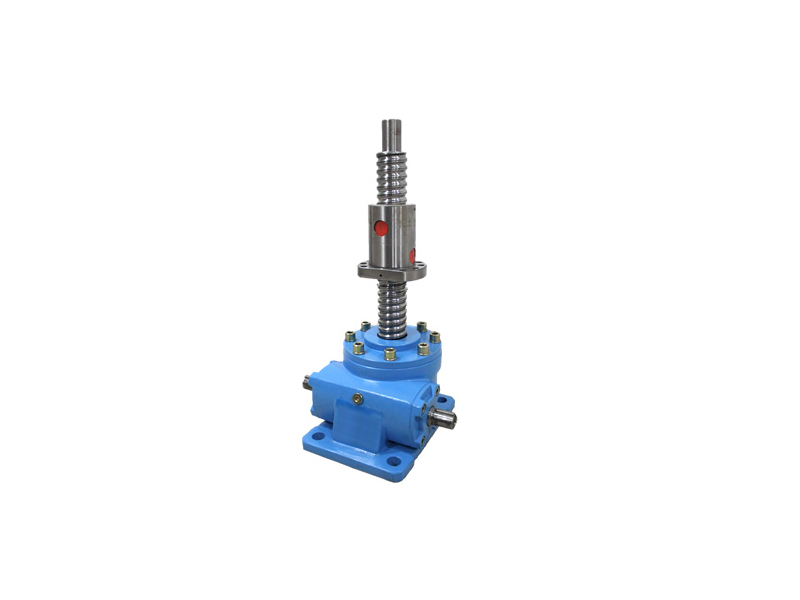
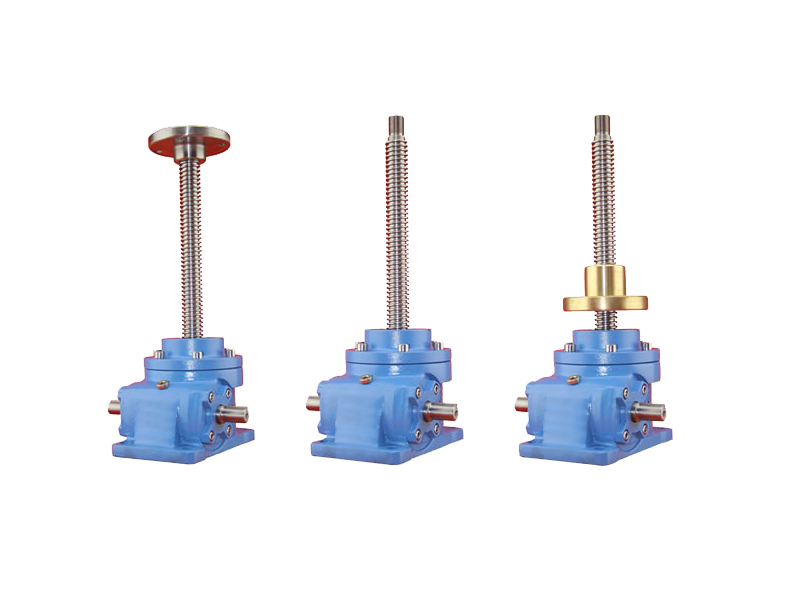
The lifting screw or spindle converts rotational motion from the worm wheel into linear travel. Precision ground screw threads ensure smooth operation and long service life. Two primary thread forms predominate: trapezoidal (Acme) threads and ball screw threads. Trapezoidal threads offer simplicity, lower cost, and excellent self-locking characteristics. Ball screw configurations incorporate recirculating ball bearings between screw and nut, dramatically reducing friction for improved efficiency in high-cycle applications.
The nut assembly houses the mating threads and typically incorporates anti-rotation features preventing the nut from spinning as the screw rotates. Bronze or composite materials provide favorable wear characteristics and lubrication retention. Additionally, wiper seals protect threads from contamination extending maintenance intervals and operational reliability.
Input Drive Interface
Worm screw jacks accommodate various input drive methods matching specific application requirements. Manual input drives utilize hand wheels or cranks for applications requiring occasional adjustments or emergency manual override capability. Electric motor drives provide automated operation with precise speed control through variable frequency drives or geared motors.
Keyed input shafts enable direct motor coupling while flanged motor adapters simplify installation. Furthermore, multiple jack systems synchronize through mechanical coupling shafts distributing drive torque evenly across all units. This synchronized drive approach proves essential for applications lifting large platforms or heavy equipment requiring multiple lifting points.
Types and Configurations of Worm Screw Jacks
Translating Screw vs. Rotating Screw Designs
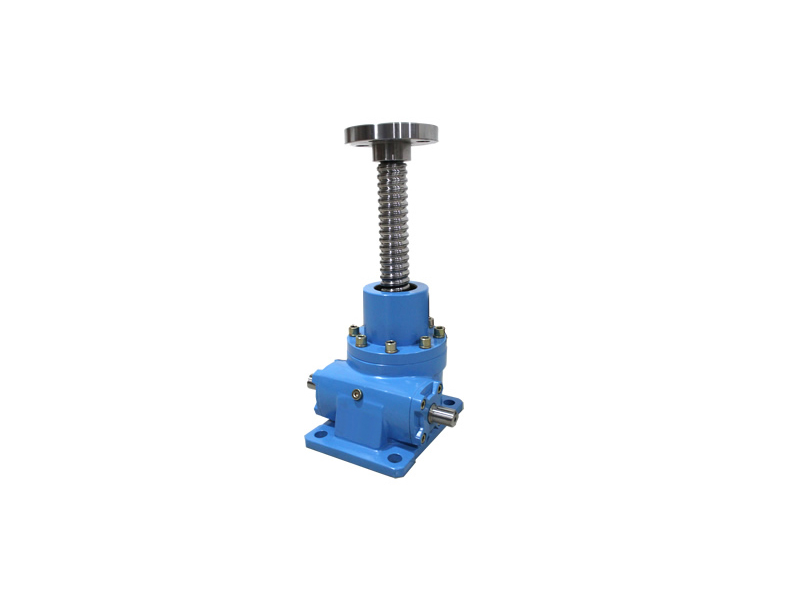
Two fundamental design philosophies characterize worm screw jack configurations. Translating screw designs, also called traveling screw or rising screw jacks, feature lifting screws that rotate and translate simultaneously. The screw extends from the housing as it lifts the load, requiring sufficient clearance for the extending screw. This configuration proves ideal for applications with vertical space availability.
Rotating screw designs, also termed keyed screw or non-rotating screw jacks, incorporate anti-rotation mechanisms preventing screw rotation while permitting only axial travel. The nut rotates instead, eliminating screw torsional stress and enabling attachment of loads requiring rotational constraint. Consequently, rotating screw designs suit applications where the load must not rotate during positioning or when nut rotation presents no operational challenges.
Upright vs. Inverted Mounting Orientations
Upright mounting configurations position the worm gear below the lifting screw with the load attachment at the screw top. This traditional arrangement provides intuitive operation with loads traveling upward during lifting operations. Upright mounting proves ideal for floor-mounted applications and situations requiring maximum stroke length.
Inverted mounting positions the worm gear above with the lifting screw extending downward. This configuration enables ceiling mounting or integration into overhead structures. Furthermore, inverted designs protect the lifting screw from falling debris or contaminants common in some industrial environments. Additionally, inverted jacks accommodate pulling loads downward rather than pushing upward, expanding application versatility.
Machine Screw Jacks vs. Ball Screw Jacks
Machine screw jacks utilize trapezoidal thread profiles with sliding friction between screw and nut. These robust devices offer excellent load capacity, inherent self-locking, and economical pricing. Efficiency typically ranges from 25% to 50% depending on thread pitch and lubrication. Moreover, the sliding action provides vibration damping beneficial in dynamic load applications.
Ball screw jacks incorporate precision ground ball screws with recirculating ball bearings replacing sliding contact. This design achieves efficiencies exceeding 90%, dramatically reducing input power requirements and heat generation. However, ball screw designs lack self-locking capability, requiring external brakes for load holding. Consequently, ball screw jacks excel in high-cycle positioning applications where efficiency and speed outweigh self-locking requirements.
Cubic vs. Worm Gear Designs
Cubic screw jacks, also known as modular screw jacks, feature compact cubic housings with multiple input and output options. The modular design enables versatile mounting orientations including upright, inverted, and horizontal configurations. Furthermore, standardized interfaces facilitate easy integration into custom machinery designs.
Traditional worm gear screw jacks employ cylindrical or rectangular housings optimized for specific mounting orientations. While less versatile than cubic designs, traditional configurations often provide cost advantages and proven reliability for standard applications. Additionally, the focused design approach enables optimization for specific load ranges and duty cycles.
Bevel Gear Screw Jacks for Directional Changes
Bevel gear screw jacks incorporate bevel gear sets creating 90-degree drive angle changes. This configuration enables horizontal input drives for vertical lifting applications or complex drive train arrangements. Moreover, bevel gear jacks accommodate higher input speeds compared to direct worm drive alternatives, improving system efficiency and reducing motor size requirements.
The bevel gear first stage reduces input speed and increases torque before engaging the worm gear mechanism. Consequently, bevel gear jacks deliver superior efficiency (typically 40-60%) compared to single-stage worm designs while maintaining self-locking characteristics. This makes them ideal for high-duty-cycle applications requiring frequent positioning adjustments.
Key Advantages of Worm Screw Jack Technology
Superior Load Holding Without Power
The inherent self-locking characteristic provides the most compelling advantage of worm screw jack technology. Once positioned, loads remain securely held indefinitely without continuous motor power, external brakes, or hydraulic pressure. This capability proves essential for applications including aircraft maintenance platforms, stage rigging systems, and industrial press positioning where load security directly impacts safety.
Compared to hydraulic or pneumatic cylinders requiring continuous pressure for load holding, worm screw jacks eliminate concerns about seal leakage, pressure loss, or power interruption causing unintended load movement. Consequently, insurance costs and safety compliance expenses decrease while operational confidence improves.
Precise Positioning and Repeatability
Worm screw jacks deliver exceptional positioning accuracy through the mechanical thread engagement between screw and nut. Positioning resolution depends on thread pitch and input drive precision. For instance, a 6mm pitch screw coupled with a 200-step motor provides positioning increments of 0.03mm. Furthermore, the elimination of hydraulic fluid compressibility or pneumatic cushioning ensures consistent, repeatable positioning essential for manufacturing processes and quality control.
Advanced position feedback systems including encoders, linear potentiometers, or proximity switches enable closed-loop control achieving positioning accuracies within ±0.01mm. This precision suits applications including coordinate measuring machines, optical alignment systems, and precision assembly equipment requiring micron-level positioning capability.
Compact Design and High Load Density
The worm gear mechanism’s inherent mechanical advantage enables compact packaging of substantial lifting capacity. A typical 10-ton capacity worm screw jack occupies less than 0.1 cubic meters while a comparable hydraulic cylinder with pump, valves, and accumulator requires significantly more space. Moreover, the vertical or horizontal orientation flexibility enables integration into space-constrained machinery designs impossible with alternative actuator technologies.
The high load density proves particularly valuable in mobile equipment, aerospace applications, and retrofit installations where space limitations constrain design options. Additionally, the compact footprint reduces material costs for supporting structures and simplifies machinery transportation and installation logistics.
Clean, Environmentally Friendly Operation
Unlike hydraulic systems requiring petroleum-based fluids presenting contamination risks, worm screw jacks utilize solid lubrication (grease) or contained oil baths eliminating external leakage concerns. This characteristic proves essential for food processing equipment, pharmaceutical manufacturing, and clean room applications where fluid contamination cannot be tolerated.
Furthermore, the absence of hydraulic pumps, valves, and accumulators simplifies environmental compliance while reducing fire hazards associated with pressurized flammable hydraulic fluids. Consequently, industries with stringent environmental regulations increasingly specify worm screw jack technology over hydraulic alternatives.
Synchronization Capability Through Mechanical Connection
Multiple worm screw jacks easily synchronize through mechanical coupling shafts distributing drive torque evenly across all units. This mechanical synchronization provides inherently reliable coordination without requiring complex electronic controls or hydraulic flow dividers. Therefore, large platforms, bridge structures, or heavy equipment requiring multiple lift points achieve precise coordinated motion maintaining alignment throughout travel range.
The mechanical approach eliminates electronic synchronization failure modes including sensor faults, controller malfunctions, or communication errors that could cause dangerous misalignment. Additionally, the system maintains synchronization even during power loss through the self-locking characteristic, preventing differential settling that could damage equipment or compromise safety.
Industrial Applications and Use Cases
Manufacturing and Assembly Operations
Manufacturing facilities extensively deploy worm screw jacks throughout production equipment for workpiece positioning, fixture adjustment, and assembly line height control. Specifically, welding fixtures utilize screw jacks creating precise component alignment during joining operations. The self-locking capability maintains alignment throughout welding cycles without requiring continuous clamping force.
Assembly line conveyors incorporate screw jack lift stations enabling ergonomic height adjustment matching individual operator preferences or accommodating different product sizes. Moreover, the mechanical simplicity provides reliable operation in harsh factory environments featuring metal chips, coolant spray, and temperature extremes challenging electronic or hydraulic systems.
Case Study: An automotive final assembly plant implemented synchronized worm screw jack systems for vehicle body positioning during door installation. Four 5-ton capacity jacks operating in synchronization maintain body alignment within ±1mm throughout the assembly process. The installation eliminated hydraulic fluid contamination concerns while improving positioning repeatability, resulting in 15% reduction in door adjustment rework and 30% decrease in hydraulic system maintenance costs.
Heavy Equipment and Machinery Leveling
Construction equipment, agricultural machinery, and industrial processing equipment incorporate worm screw jacks providing precision leveling on uneven terrain or compensating for foundation settlement. Mobile crane outrigger leveling systems utilize rugged screw jacks handling ground reaction forces exceeding 50 tons per jack. The self-locking characteristic ensures stable support even on sloped or soft ground conditions.
Industrial presses including forging presses, stamping equipment, and injection molding machines employ screw jacks for bed leveling and parallelism adjustment. Maintaining precise parallelism between press platens directly impacts product quality and tooling life. Consequently, screw jack adjustment systems deliver measurable improvements in production quality while reducing tooling maintenance expenses.
Stage Rigging and Entertainment Systems
Theaters, concert venues, and television studios extensively utilize worm screw jack systems for stage rigging, orchestra pit lifts, and performance platform positioning. Synchronized jack systems lift stage sections weighing multiple tons while maintaining precise level alignment essential for performer safety and professional presentation quality.
The self-locking characteristic proves critical for performer safety, ensuring platforms remain securely positioned throughout performances even during power interruptions. Furthermore, the quiet operation compared to hydraulic alternatives prevents acoustic interference during performances. Modern stage rigging systems incorporate hundreds of synchronized screw jacks creating complex three-dimensional stage transformations enhancing audience experience.
Aircraft Maintenance and Aerospace Applications
Aircraft maintenance facilities employ specialized worm screw jacks for securing aircraft during maintenance operations including wheel removal, landing gear service, and structural inspections. These critical safety applications demand absolute load holding reliability, making the inherent self-locking characteristic essential. Aerospace-grade screw jacks undergo rigorous certification testing demonstrating reliable operation under worst-case loading scenarios.
Manufacturing applications include spacecraft positioning during assembly, satellite deployment mechanism actuation, and ground support equipment for rocket engines. The contamination-free operation suits clean room environments while the precise positioning supports the micron-level tolerances required in aerospace manufacturing. Additionally, the elimination of hydraulic fluids prevents contamination of sensitive aerospace components and propulsion systems.
Solar Tracking and Renewable Energy Systems
Solar photovoltaic installations increasingly incorporate worm screw jack actuators for dual-axis tracking systems maximizing energy capture throughout daily and seasonal solar cycles. The self-locking capability maintains panel orientation during high wind conditions without requiring continuous motor power. Moreover, the low maintenance requirements suit remote installations where service access proves challenging and expensive.
Wind turbine pitch control systems utilize screw jacks adjusting blade angles optimizing energy capture across varying wind speeds. The robust mechanical design withstands harsh environmental conditions including temperature extremes, moisture, and vibration while delivering reliable operation essential for renewable energy system economics.
Material Handling and Warehouse Automation
Distribution centers and warehouses deploy screw jack lift tables for ergonomic material handling, reducing worker injury risks associated with manual lifting. Scissor lift tables incorporating screw jack actuators adjust working heights matching individual operator preferences or accommodating various container sizes. Furthermore, the precise positioning enables automated integration with robotic material handling systems.
Dock levelers utilize screw jacks creating smooth transitions between warehouse floors and truck beds of varying heights. The self-locking characteristic maintains position under forklift traffic loads while the robust mechanical design withstands the harsh loading dock environment including weather exposure, impact loading, and frequent cycling.
Selection Criteria for Worm Screw Jacks
Load Capacity and Safety Factor Determination
Proper load capacity selection requires comprehensive analysis of static loads, dynamic forces, shock loading, and safety margins. The static load represents the weight the jack must support when stationary. Dynamic loads include forces during acceleration, deceleration, and movement. Additionally, shock loads from sudden load application or impact must be considered.ASME B30 safety standards and industry guidelines typically recommend safety factors between 2:1 and 4:1 depending on application severity and consequence of failure. For example, a 10-ton actual load with 3:1 safety factor requires 30-ton rated jack capacity. Furthermore, applications with potential shock loading or safety-critical implications warrant higher safety factors ensuring adequate design margin.
Travel Distance and Stroke Requirements
Travel distance determines the lifting screw length and housing size required. Worm screw jacks accommodate standard strokes from 100mm to over 3,000mm depending on design and manufacturer. Longer strokes require larger diameter screws maintaining adequate column strength resisting buckling under compression loading.The Euler buckling formula, as documented in engineering handbooks, calculates critical load for compression members, limiting practical stroke lengths for given screw diameters and load capacities. Therefore, applications requiring extended strokes and high loads may necessitate multiple shorter-stroke jacks operating in series or alternative actuator technologies better suited to the specific requirements.
Speed and Duty Cycle Considerations
Lifting speed depends on input rotation speed, gear ratio, and thread pitch. Typical worm screw jack speeds range from 1mm/second to 50mm/second. Higher speeds require coarser thread pitches reducing mechanical advantage and self-locking reliability. Consequently, applications demanding rapid positioning may benefit from ball screw designs or multi-stage gear reduction increasing worm wheel rotation speed.
Duty cycle classification determines component sizing and lubrication requirements. Intermittent duty applications operating occasionally throughout the day accommodate smaller motors and standard lubrication. Continuous duty operations require oversized components dissipating heat generated by friction and may necessitate forced lubrication systems maintaining proper operating temperatures.
Environmental Conditions and Protection Requirements
Operating environment significantly influences design specification and material selection. Temperature extremes affect lubrication viscosity, seal materials, and dimensional stability. Specifically, high-temperature applications (exceeding 80°C) require synthetic lubricants and high-temperature seals. Low-temperature environments (below -20°C) necessitate special cold-weather greases maintaining proper consistency.
Corrosive atmospheres including chemical processing environments, marine applications, and outdoor installations require stainless steel or specially coated components resisting degradation. Furthermore, food processing and pharmaceutical applications mandate food-grade lubricants, stainless steel construction, and washdown-capable designs meeting sanitation requirements.
Positioning Accuracy and Control Requirements
Positioning accuracy requirements determine screw thread quality, backlash specifications, and control system sophistication. Standard commercial-grade threads provide positioning accuracy within ±0.5mm suitable for general industrial applications. Precision ground threads achieve ±0.1mm accuracy supporting higher-precision requirements.
Applications demanding micron-level positioning specify ball screw jacks with precision-ground threads, preloaded nut assemblies eliminating backlash, and closed-loop control systems incorporating high-resolution encoders. The enhanced precision commands premium pricing justified by applications including coordinate measuring machines, optical alignment systems, and semiconductor manufacturing equipment.
Installation and Maintenance Best Practices
Proper Mounting and Alignment
Correct installation fundamentally impacts worm screw jack performance, reliability, and service life. Mounting surfaces must provide adequate rigidity preventing flexure under load that could cause binding or accelerated wear. Moreover, mounting surfaces should be flat, parallel, and perpendicular to screw travel direction within manufacturer-specified tolerances typically ±0.5mm per meter.
Soft mounting feet or flexible couplings accommodate minor misalignment but cannot compensate for gross installation errors. Furthermore, multiple jack systems require careful alignment ensuring synchronized units operate in parallel without imposing side loads. Misalignment between jacks causes internal binding, increased friction, and premature component failure.
Lubrication Requirements and Intervals
Proper lubrication proves essential for efficient operation and component longevity. Worm gear meshes require oil bath or grease lubrication reducing friction and dissipating heat generated during operation. Lifting screw threads also require lubrication, typically applied through grease fittings or automatic lubrication systems.
Initial lubrication occurs during manufacturing but periodic maintenance replenishes lubricant maintaining proper protection. Oil bath systems require changes every 2,000-5,000 operating hours depending on duty cycle and contamination exposure. Grease lubrication points need servicing every 500-1,000 hours. Furthermore, extreme environments or continuous duty applications demand more frequent lubrication intervals maintaining adequate protection.
Load Testing and Commissioning Procedures
New installations require systematic commissioning procedures verifying proper operation before full production deployment. Load testing confirms adequate capacity and identifies installation deficiencies before operational use. Therefore, apply test loads equal to 125% of maximum operational load while monitoring for abnormal noise, vibration, or temperature rise.
Positioning accuracy verification measures actual travel distances against commanded inputs across the full stroke range. This testing identifies mechanical backlash, encoder calibration errors, or control system issues requiring correction. Additionally, synchronized systems require verification that multiple jacks maintain proper coordination throughout travel range under various loading conditions.
Preventive Maintenance Programs
Systematic preventive maintenance maximizes worm screw jack reliability while minimizing unexpected failures and costly production interruptions. Maintenance programs should include visual inspections, lubrication service, operational testing, and component condition monitoring. Specifically, monthly visual inspections identify oil leaks, unusual wear patterns, loose mounting bolts, or environmental damage requiring attention.
Quarterly operational testing verifies proper function including smooth movement throughout stroke range, absence of unusual noise or vibration, and correct positioning accuracy. Annual detailed inspections may include disassembly for internal component examination, measurement of critical wear surfaces, and replacement of wear items including seals and gaskets before failure occurs.
Common Issues and Troubleshooting
Operational problems typically manifest as unusual noise, increased drive torque, positioning errors, or visible leakage. Grinding or squealing noises indicate inadequate lubrication requiring immediate service. Increased motor current or drive torque suggests internal binding from misalignment, contamination, or component wear necessitating inspection and correction.
Positioning errors including backlash or inconsistent travel distances may result from worn threads, loose mounting, or control system calibration drift. Therefore, systematic troubleshooting procedures isolating mechanical versus electrical causes enable efficient problem resolution. Regular maintenance records tracking operational parameters help identify gradual degradation trends enabling proactive intervention before catastrophic failure occurs.
Cost Considerations and Economic Analysis
Initial Investment Factors
Worm screw jack costs vary significantly based on capacity, stroke length, materials, and feature specifications. Basic 1-ton capacity jacks with 300mm stroke cost approximately $200-$500 for commercial-grade units. Industrial-quality 5-ton jacks with 600mm stroke range from $800-$2,000 depending on manufacturer and specifications. Heavy-duty 20-ton configurations with 1,000mm stroke require investments of $3,000-$8,000 per unit.
Synchronized multi-jack systems multiply equipment costs while adding expenses for coupling shafts, alignment fixtures, and control systems. A typical four-jack synchronized system might cost $15,000-$40,000 for complete installation including mechanical synchronization components, motor drives, and controls. However, the investment delivers capabilities impossible with single-jack configurations while providing operational advantages justifying the additional expense.
Total Cost of Ownership Analysis
Long-term ownership costs encompass equipment purchase price, installation expenses, energy consumption, maintenance requirements, and eventual replacement. Energy consumption for worm screw jacks remains modest due to intermittent operation in most applications. A 5-ton jack operating 30 minutes daily consumes approximately 150-300 watts translating to minimal annual energy costs.
Maintenance expenses include lubricant replacement, seal replacement, and periodic inspections. Annual maintenance for industrial screw jacks typically costs $100-$500 per unit depending on duty cycle and environmental severity. Properly maintained worm screw jacks deliver service lives exceeding 15-20 years providing excellent long-term value compared to alternative technologies requiring more frequent replacement.
Comparison with Alternative Technologies
Hydraulic cylinders offer faster speeds and potentially lower initial costs for simple applications but require pumps, valves, reservoirs, and plumbing increasing system complexity and cost. Furthermore, hydraulic systems lack self-locking capability necessitating counterbalance valves or pilot-operated check valves adding expense and complexity. Maintenance costs for hydraulic systems typically exceed screw jack alternatives due to seal replacement, fluid changes, and contamination management.
Electric linear actuators provide excellent positioning accuracy and speed but lack inherent self-locking requiring external brakes for load holding. Ball screw actuators deliver superior efficiency but command premium pricing compared to machine screw designs. Therefore, comprehensive economic analysis must account for initial investment, operational characteristics, maintenance costs, and application-specific requirements determining optimal technology selection.
Market Trends and Future Developments
Global Market Growth and Regional Dynamics
The global screw jacks market demonstrates robust growth with projections indicating expansion from 14.26 billion USD in 2024 to 25.32 billion USD by 2034, representing a 5.91% CAGR. Asia Pacific dominates market share driven by rapid industrialization, infrastructure development, and manufacturing expansion across China, India, and Southeast Asian economies. Furthermore, growing automation adoption increases demand for precise positioning systems including screw jack technology.
North America and Europe represent mature markets characterized by replacement demand and technology upgrades rather than capacity expansion. However, increasing emphasis on manufacturing automation, Industry 4.0 implementation, and renewable energy deployment sustains steady market growth. Additionally, stringent safety regulations and environmental standards favor mechanical actuator technologies over hydraulic alternatives driving market share gains.
Technological Innovations and Smart Integration
Modern worm screw jack designs increasingly incorporate smart technology including integrated position sensors, load monitoring, temperature sensors, and wireless connectivity. IoT-enabled screw jacks transmit operational data to cloud-based analytics platforms enabling predictive maintenance, performance optimization, and remote monitoring. Consequently, organizations leverage operational intelligence improving reliability while reducing maintenance costs.
Advanced control systems implement sophisticated motion profiles including S-curve acceleration reducing mechanical shock and extending component life. Closed-loop control algorithms compensate for load variations maintaining consistent positioning accuracy across varying operational conditions. Furthermore, integration with manufacturing execution systems and programmable logic controllers enables coordinated operation within automated production environments.
Material Advancements and Performance Enhancement
Material science advances enable lighter, stronger components improving power density and efficiency. High-strength aluminum alloys reduce weight while maintaining adequate strength for moderate loads. Advanced bronze alloys incorporating special additives enhance wear resistance extending service intervals. Furthermore, surface treatment technologies including diamond-like carbon coatings dramatically reduce friction improving efficiency while extending component life.
Composite materials including fiber-reinforced polymers offer corrosion resistance combined with excellent strength-to-weight ratios. These advanced materials suit corrosive environments and weight-sensitive applications including aerospace and marine deployments. Additionally, the excellent vibration damping characteristics of composite materials reduce noise and mechanical stress improving operational smoothness.
Sustainability and Environmental Considerations
Environmental sustainability increasingly influences actuator technology selection and design. Worm screw jacks inherently support sustainability goals through long service life, recyclable metal construction, and elimination of hydraulic fluid disposal requirements. Furthermore, the energy efficiency improvements through advanced lubrication and bearing technologies reduce operational carbon footprints.
Manufacturers increasingly implement sustainable production processes reducing environmental impact during equipment manufacturing. Life cycle assessments quantify total environmental impact from raw material extraction through manufacturing, operation, and end-of-life disposal or recycling. Consequently, environmentally conscious organizations specify equipment with demonstrated sustainability credentials supporting corporate environmental commitments and regulatory compliance.
Conclusion: Worm Screw Jacks as Essential Mechanical Solutions
Worm screw jacks represent fundamental mechanical devices providing reliable lifting, positioning, and load holding capabilities across diverse industrial applications. The inherent self-locking characteristic, combined with precise positioning capability, compact design, and mechanical simplicity, establishes worm screw jack technology as the preferred solution for numerous material handling and positioning challenges. Load capacities spanning 100 kilograms to 150 tons accommodate applications from delicate instrumentation to heavy industrial machinery.
The mechanical actuator market’s projected growth to 25.32 billion USD by 2034 reflects sustained demand driven by manufacturing automation, renewable energy deployment, and infrastructure development worldwide. Moreover, ongoing technological advancement incorporating smart sensors, advanced materials, and integrated control systems enhances capability while maintaining the fundamental reliability and simplicity characterizing worm screw jack technology.
Organizations evaluating positioning and load handling solutions should carefully assess worm screw jack advantages including self-locking capability, positioning precision, environmental compatibility, and long-term reliability. The technology’s proven performance across decades of industrial service, combined with ongoing innovation addressing emerging requirements, ensures worm screw jacks remain essential components in modern industrial systems supporting efficient, safe, and profitable operations.
Need Expert Guidance? If you have technical questions about worm screw jack selection, system design, or application requirements, our engineering team offers complimentary technical consultation services. Contact us anytime for free technical consultation and professional product quotations tailored to your specific operational needs.
Technical Specifications Disclaimer
The technical information, specifications, and performance data presented in this guide are provided for general educational purposes only. All load capacities, dimensions, and operational parameters represent typical industry values and may vary significantly between manufacturers, models, and specific configurations. Actual system performance depends on numerous factors including installation quality, operating conditions, maintenance practices, and environmental variables.
This guide does not constitute engineering specifications, design recommendations, or purchasing advice. Organizations implementing worm screw jack systems should:
- Consult qualified mechanical engineers for proper capacity calculations and safety factor determination
- Obtain detailed specifications from manufacturers for specific models under consideration
- Conduct comprehensive load analysis accounting for static loads, dynamic forces, and potential shock loading
- Verify environmental compatibility ensuring selected components suit actual operating conditions
- Follow manufacturer installation and maintenance guidelines ensuring reliable, safe operation
No warranty is provided regarding the accuracy, completeness, or suitability of information for any particular application. System selection, design, installation, operation, and maintenance should occur under guidance of qualified professionals familiar with specific requirements, applicable regulations, and industry standards.
For accurate, application-specific information and professional quotations, please contact certified worm screw jack manufacturers or qualified mechanical engineering consultants who can evaluate your unique requirements and provide appropriate technical recommendations.
This disclaimer applies to all technical specifications, performance claims, application examples, and operational guidance presented throughout this document.