
What is a Planetary Gearbox? Complete Technical Guide to Epicyclic Gear Systems and High-Performance Power Transmission
Introduction: Understanding Planetary Gearbox Technology
A planetary gearbox, also known as an epicyclic gearbox, represents a sophisticated mechanical power transmission system characterized by its unique arrangement of gears orbiting around a central axis. The distinctive configuration features a central “sun” gear, multiple “planet” gears revolving around the sun, and an outer “ring” gear (annulus) encircling the entire assembly. This ingenious design enables exceptional torque density, compact packaging, and high efficiency—characteristics that have made planetary gearboxes indispensable across automotive, robotics, aerospace, and industrial automation applications.
The name “planetary” derives from the astronomical arrangement where planet gears orbit the sun gear similar to planets revolving around a star. Consequently, this concentric configuration enables efficient load distribution among multiple gear meshes, delivering performance characteristics often unattainable with conventional parallel-shaft gearboxes. Single-stage planetary gearboxes achieve remarkable efficiency ratings of 95-98%, while their compact coaxial design maximizes power density within minimal envelopes.
Global market data demonstrates the essential role planetary gearboxes play in modern industrial systems. The industrial planetary gearbox market reached 4.5-8.12 billion USD in 2025, with projections indicating growth to 7.6-12.2 billion USD by 2032-2035 at CAGR of 5.2-6.0%. Furthermore, the precision planetary gearbox segment valued at 2.53-5.02 billion USD in 2024-2025 anticipates expansion to 10.55-10.81 billion USD by 2032-2034 at elevated 8.5-9.9% CAGR, driven by automation, robotics, and renewable energy adoption worldwide.
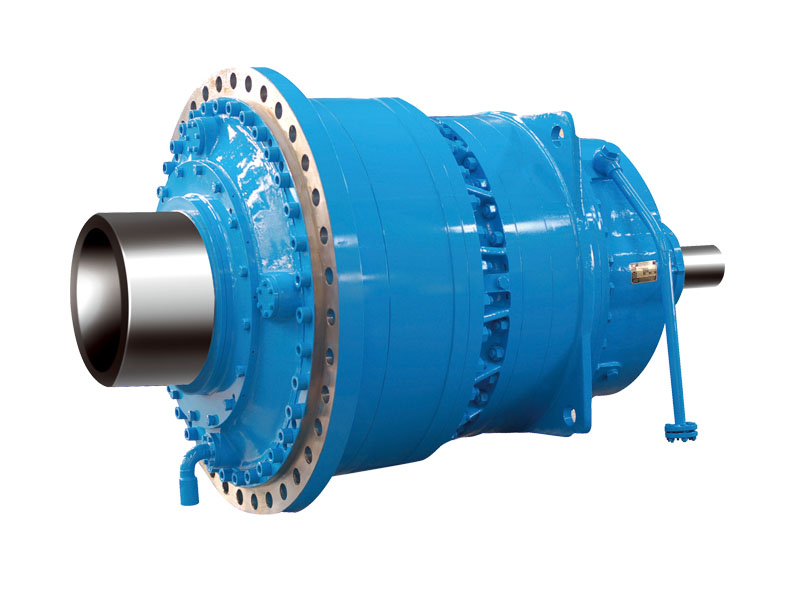
Fundamental Components and Operating Principles
Sun Gear: The Central Power Input
The sun gear occupies the center position serving as the primary power input in most planetary gearbox configurations. This central gear meshes simultaneously with all planet gears surrounding it. Typically manufactured from hardened alloy steel following AGMA gear quality standards, the sun gear requires precise tooth profile manufacturing maintaining optimal contact patterns across multiple simultaneous meshes.Consequently, the sun gear design directly influences overall system efficiency, noise characteristics, and load-carrying capacity.
Planet Gears and Carrier Assembly
Planet gears revolve around the sun gear while simultaneously meshing with both sun and ring gears. Most configurations incorporate three to six planet gears equally spaced around the sun, distributing load forces across multiple gear meshes. This load sharing represents the fundamental advantage of planetary gearbox architecture—each planet gear carries only a fraction of total torque, enabling compact designs handling substantial power levels.
The planet carrier assembly maintains precise planet gear positioning while providing the output shaft connection in reduction configurations. Furthermore, carrier design must accommodate planet gear rotation on individual shafts (planet pins) while the entire assembly revolves around the central axis. High-precision bearings support planet gears minimizing friction losses critical for achieving efficiency ratings exceeding 95%.
Ring Gear: The External Housing
The ring gear (annulus) features internal teeth surrounding the entire planetary assembly. This outermost component meshes with planet gears creating the third simultaneous contact in the gear train. In most reduction configurations, the ring gear remains stationary, held fixed by the gearbox housing. However, advanced designs may allow ring gear rotation, enabling alternative gear ratio combinations and operational modes.
Gear Ratio Calculation and Configuration
Planetary gearbox gear ratios depend on which component serves as input, which provides output, and which remains stationary. The most common reduction configuration fixes the ring gear, inputs power to the sun gear, and extracts reduced-speed output from the carrier. The basic ratio formula: Ratio = 1 + (Ring teeth / Sun teeth). For example, a sun gear with 20 teeth and ring gear with 80 teeth yields a 5:1 reduction ratio.
Multiple-stage planetary gearboxes compound individual stage ratios achieving higher overall reductions. A two-stage configuration with 5:1 per stage delivers 25:1 overall reduction. Moreover, three-stage designs commonly provide ratios exceeding 100:1 while maintaining compact envelopes impossible with parallel-shaft configurations.
Key Advantages of Planetary Gearbox Systems
Exceptional Torque Density and Compact Design
The coaxial arrangement with load distribution across multiple planet gears enables planetary gearboxes to deliver unmatched torque density—the ratio of torque capacity to physical size. Specifically, planetary designs achieve 3-5 times greater torque capacity compared to parallel-shaft gearboxes of equivalent envelope dimensions. This characteristic proves invaluable in applications with severe space constraints including robotics, aerospace actuators, and mobile equipment.
The inline input-output configuration simplifies machine design by eliminating offset mounting common with worm or helical gearboxes. Consequently, planetary gearboxes integrate seamlessly into complex machinery layouts while minimizing installation space requirements.
High Efficiency and Minimal Power Loss
Single-stage planetary gearboxes achieve mechanical efficiency ratings of 95-98% when properly designed and manufactured. This exceptional performance results from pure rolling contact at gear meshes, minimal sliding friction, and optimized tooth profiles reducing energy losses. Multi-stage configurations maintain efficiency above 90% even with three reduction stages—performance unattainable with self-locking worm gearboxes operating at 40-70% efficiency.
The high efficiency translates directly to reduced heat generation, enabling higher continuous power ratings without oversized housings or supplemental cooling systems. Furthermore, energy-conscious industries increasingly specify planetary technology supporting sustainability initiatives and operational cost reduction.
Load Distribution and Enhanced Durability
The multiple planet gears share total load equally, dramatically reducing stress on individual gear teeth compared to single-mesh designs. This load distribution enables planetary gearboxes to handle shock loads and torque spikes common in heavy machinery without premature failure. Additionally, the balanced forces minimize bearing loads and housing stress, extending overall system service life.
Industry experience demonstrates planetary gearboxes operating reliably for 50,000+ hours in demanding applications—service lives exceeding alternative technologies by substantial margins. The enhanced durability reduces maintenance frequency and replacement costs over equipment lifetimes.
Low Backlash and Precision Positioning
Precision planetary gearboxes meeting ISO 1328 gear accuracy standards achieve backlash levels below 3 arc-minutes through careful manufacturing tolerances and optimal gear tooth design. Some servo-grade configurations deliver sub-1 arc-minute backlash supporting applications requiring exceptional positioning accuracy. This precision proves essential for robotics, CNC machinery, and automated assembly where positioning errors directly impact product quality.
The symmetric planetary arrangement inherently cancels radial forces, eliminating shaft deflection that would otherwise compromise positioning accuracy. Consequently, planetary gearboxes maintain consistent performance throughout their operational envelope without position-dependent accuracy variations.
Types and Configurations of Planetary Gearboxes
Standard Planetary Reduction Gearboxes
Standard planetary gearboxes provide fixed reduction ratios through stationary ring gears with power input to sun gears and output from carriers. These workhorse configurations serve general industrial applications including conveyors, mixers, and material handling equipment. Ratios typically range from 3:1 to 10:1 per stage, with multi-stage configurations achieving higher overall reductions.
Standard designs prioritize cost-effectiveness and reliability over extreme precision, making them suitable for applications where positioning accuracy requirements remain modest. Furthermore, the robust construction withstands harsh industrial environments including dust, moisture, and temperature variations.
Precision Servo Planetary Gearboxes
Precision servo planetary gearboxes incorporate ground gears, premium bearings, and tight manufacturing tolerances achieving backlash below 3 arc-minutes. These specialized units serve robotics, CNC machinery, semiconductor manufacturing, and automation applications demanding exceptional accuracy. Moreover, the low inertia design enables rapid acceleration and deceleration critical for dynamic positioning applications.
Servo-grade planetary gearboxes typically couple directly to servo motors through integrated mounting flanges eliminating couplings and alignment concerns. The matched inertia ratios optimize system response while the compact integration minimizes installation envelope. However, precision manufacturing commands premium pricing—often 2-3 times standard planetary costs.
Right-Angle and Offset Configurations
While most planetary gearboxes feature inline input-output, specialized configurations incorporate bevel or hypoid gearing creating 90-degree drive angle changes. These right-angle planetary gearboxes accommodate machinery layouts requiring directional changes while maintaining planetary advantages including high torque density and efficiency.
Offset designs position input and output shafts on parallel but non-coaxial centerlines, enabling flexible drive train arrangements. These configurations suit applications where inline mounting proves impractical due to space constraints or machinery access requirements.
High-Ratio Multi-Stage Designs
Applications requiring extreme speed reduction specify multi-stage planetary gearboxes with three or four reduction stages achieving ratios exceeding 1000:1. The cascaded arrangement compounds individual stage reductions while the compact coaxial design maintains reasonable overall dimensions. High-ratio configurations serve slow-speed, high-torque applications including winches, rotary tables, and heavy machinery positioning systems.
Each additional stage increases complexity and cost while modestly reducing overall efficiency. Three-stage designs typically maintain 92-95% efficiency—still substantially better than alternative technologies. Organizations must balance ratio requirements against cost and efficiency considerations when specifying multi-stage configurations.
Industrial Applications and Use Cases
Robotics and Automation Systems
Modern industrial robots complying with ISO 10218 robotic safety standards extensively employ precision planetary gearboxes in joint actuators requiring high torque within compact envelopes. The low backlash ensures accurate positioning essential for assembly operations, welding, and material handling. Specifically, six-axis articulated robots incorporate planetary gearboxes at each joint axis, with ratios selected to match servo motor characteristics and load requirements.
Collaborative robots (cobots) particularly benefit from planetary technology’s compact size enabling closer human-robot collaboration without bulky actuators. Furthermore, the high efficiency reduces heat generation critical in enclosed actuator housings. Leading robot manufacturers standardize on planetary gearboxes across product lines, demonstrating technology maturity and reliability.
Automotive and Electric Vehicle Drivetrains
Automotive applications include automatic transmissions incorporating planetary gear sets enabling multiple speed ratios through clutch engagement variations. Electric vehicles utilize single-speed planetary gearboxes connecting motors to drive axles, providing necessary speed reduction while maintaining high efficiency essential for maximizing driving range.
Hybrid vehicles employ complex planetary configurations splitting engine power between wheels and generator while enabling multiple operational modes. The Toyota Prius pioneered planetary-based power-split hybrid systems—a design subsequently adopted across the hybrid vehicle industry. These demanding automotive applications validate planetary reliability under high-duty-cycle conditions.
Wind Turbine Pitch and Yaw Systems
Wind turbines deploy planetary gearboxes in blade pitch control systems adjusting blade angles optimizing energy capture across varying wind speeds. These rugged units withstand continuous operation in harsh environments featuring temperature extremes, moisture, and vibration. Moreover, the self-locking capability in some planetary configurations maintains blade position without continuous motor power.
Yaw drive systems incorporate massive planetary gearboxes rotating entire nacelles tracking optimal wind direction. These slow-speed, high-torque applications perfectly match planetary capabilities, with some installations handling torques exceeding 500,000 Nm. The proven offshore wind turbine performance demonstrates planetary suitability for renewable energy infrastructure.
Construction and Material Handling Equipment
Mobile construction equipment including excavators, wheel loaders, and cranes utilize planetary final drives and swing drives handling extreme loads in demanding environments. The compact inline design fits within wheel hubs and turntable assemblies while delivering substantial torque capacity. Furthermore, the sealed housing construction protects internal components from dust, mud, and water ingress common on construction sites.
Material handling systems incorporate planetary gearboxes throughout conveyor drives, lift mechanisms, and positioning systems. The high torque density enables compact installations while excellent reliability minimizes maintenance requirements critical for 24/7 operations.
Case Study: A logistics automation company implemented precision planetary gearboxes throughout automated storage and retrieval systems. The low-backlash performance enabled positioning accuracy within ±0.5mm across 15-meter vertical travel, while 50,000-hour service life eliminated unplanned maintenance interruptions. The installation delivered 99.7% system uptime exceeding customer requirements while supporting rapid order fulfillment throughput essential for e-commerce operations.
Selection Criteria and Technical Specifications
Load Capacity and Service Factor
Proper planetary gearbox selection requires comprehensive torque analysis accounting for peak loads, average operational torque, and service factors reflecting application duty cycles. Service factors typically range from 1.0 for uniform loads to 2.5 for heavy shock loading. Consequently, applications experiencing substantial load variations require generous capacity margins ensuring reliable long-term operation.
Dynamic torque calculations must consider acceleration and deceleration forces, particularly in high-inertia or rapid-cycling applications. Manufacturers provide selection software calculating required ratings based on application parameters including motor characteristics, load profiles, and operational duty cycles.
Efficiency and Heat Dissipation
While planetary gearboxes deliver excellent efficiency, multi-stage configurations and high-speed operation generate heat requiring adequate dissipation. Applications with continuous high-power transmission may require forced cooling or oversized housings providing sufficient surface area for convective heat transfer. Specifically, installations exceeding manufacturer thermal ratings experience accelerated lubricant degradation and potential component failure.
Efficiency specifications should account for operational conditions including temperature, lubrication quality, and load variations. Published efficiency values typically represent optimal conditions—actual performance may vary based on installation and operating parameters.
Backlash Requirements and Precision
Applications demanding accurate positioning specify maximum permissible backlash matching precision requirements. General industrial applications tolerate 10-15 arc-minutes, automation systems typically require below 5 arc-minutes, while servo applications mandate sub-3 arc-minute performance. Organizations should balance precision requirements against cost—each increment of improved accuracy commands substantial price premiums.
Some manufacturers offer “low backlash” and “ultra-low backlash” options within product lines, enabling customers to optimize specifications matching actual needs. Specifying excessive precision unnecessarily inflates costs without delivering operational benefits.
Mounting Configuration and Integration
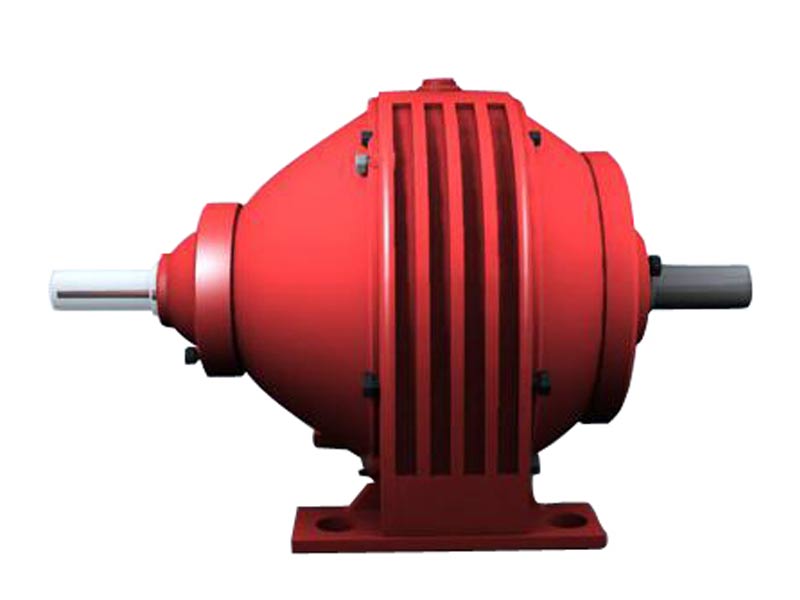
Planetary gearboxes accommodate various mounting arrangements including foot mounting, flange mounting, and shaft mounting. The optimal configuration depends on machinery layout, available space, and load orientation. Additionally, input coupling methods range from direct motor mounting through integrated flanges to flexible couplings accommodating misalignment.
Output shaft configurations include solid shafts, hollow shafts for through-bore mounting, and flanged outputs for bolted connections. Organizations should collaborate with gearbox suppliers during design phases ensuring selected configurations integrate optimally with overall machine architectures.
Maintenance and Operational Considerations
Planetary gearboxes require minimal maintenance when properly specified and operated within ratings. Initial oil fill typically lasts 10,000-20,000 hours before first change, with subsequent intervals extending to 20,000-40,000 hours using synthetic lubricants. However, applications in harsh environments or extreme temperatures may require more frequent service intervals.
Regular inspection of mounting bolts, seals, and breather assemblies identifies potential issues before failures occur. Unusual noise or vibration indicates developing problems requiring investigation. Organizations should maintain service records tracking oil changes, operational hours, and any performance anomalies supporting predictive maintenance and warranty claims.
Conclusion: Planetary Gearboxes in Modern Industry
Planetary gearboxes represent sophisticated power transmission solutions delivering unmatched combination of compact size, high efficiency, exceptional torque density, and precision performance. The unique epicyclic architecture with load distribution across multiple gear meshes enables capabilities often unattainable with alternative technologies. Efficiency ratings of 95-98% combined with service lives exceeding 50,000 hours establish planetary gearboxes as preferred solutions across robotics, automotive, renewable energy, and industrial automation applications.
Market growth projections indicating the industrial planetary gearbox market reaching 12.2 billion USD by 2035 reflect sustained demand driven by automation adoption, electric vehicle proliferation, and renewable energy infrastructure expansion. Furthermore, ongoing technological advancement including improved materials, optimized tooth profiles, and integrated sensing capabilities ensures planetary technology remains at the forefront of precision power transmission.
Organizations evaluating gearbox solutions should carefully assess planetary advantages including compact design, high efficiency, load distribution, and precision positioning against application requirements. Proper selection considering torque requirements, precision needs, environmental conditions, and integration requirements ensures optimal performance supporting productive, efficient, and reliable operations across diverse industrial applications.
Need Expert Guidance? If you have technical questions about planetary gearbox selection, ratio calculations, or application requirements, our engineering team offers complimentary technical consultation services. Contact us anytime for free technical consultation and professional product quotations tailored to your specific power transmission needs.
Technical Specifications Disclaimer
The technical information, performance data, and specifications presented in this guide are provided for general educational purposes only. All efficiency ratings, load capacities, and operational parameters represent typical industry values and may vary significantly between manufacturers, models, and specific configurations. Actual gearbox performance depends on design quality, manufacturing tolerances, lubrication selection, operating conditions, and proper installation practices.
This guide does not constitute engineering specifications or purchasing recommendations. Organizations implementing planetary gearbox systems should consult qualified mechanical engineers for proper sizing, verify manufacturer specifications, and ensure compatibility with specific application requirements and operating conditions.
This disclaimer applies to all technical information, efficiency claims, application examples, and operational guidance presented throughout this document.