
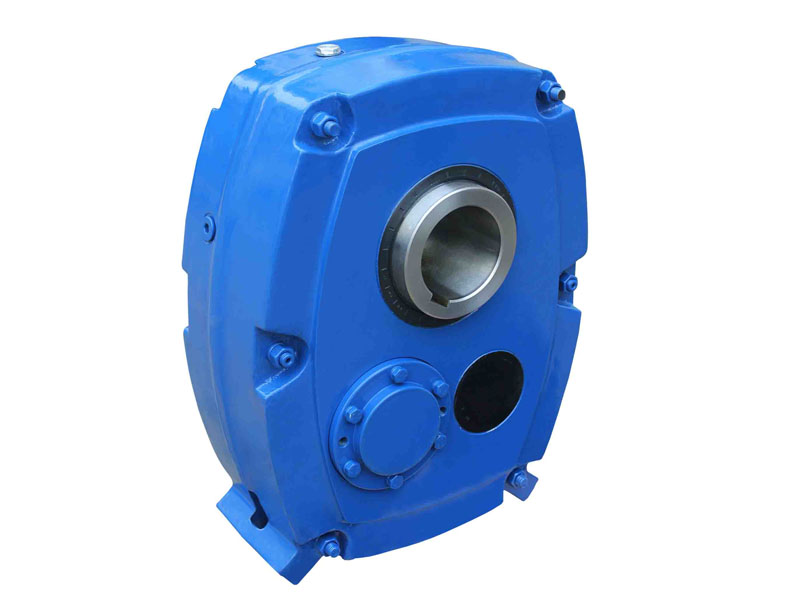
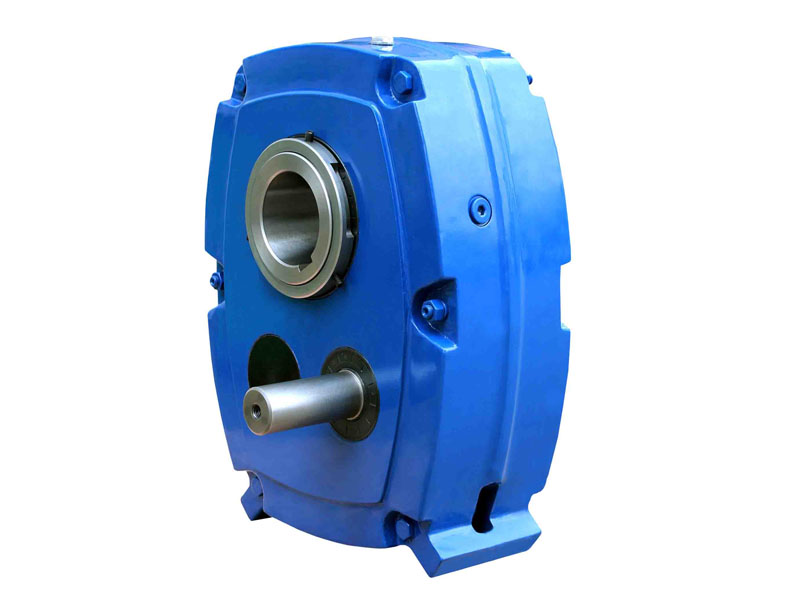
SMRA Helical Reducer – Shaft Mounted Drive for Belt Conveyors
Reliable shaft mounted gearbox for conveyor systems. Helical gear design, 277-7449Nm torque, dual bore options. Ideal for mining & material handling.
Product Introduction
The SMRA Series helical reducer delivers cost-effective power transmission specifically designed for belt conveyor applications across mining, quarrying, and bulk material handling industries. This shaft mounted drive unit combines robust gray cast iron construction with precision involute helical gearing, providing dependable performance in demanding industrial environments. Featuring flexible installation configurations and dual output bore options, the SMRA reducer simplifies integration into existing conveyor systems while maintaining exceptional operational reliability.
Core Design Features
Involute Helical Gear Technology
The transmission system utilizes involute helical gears manufactured through advanced carburizing, quenching, and grinding processes. This precision gear profile ensures gradual tooth engagement, resulting in smooth power delivery and reduced operational noise compared to spur gear alternatives. The helical design distributes loads evenly across multiple teeth, enhancing load capacity and extending component service life. Surface hardening creates a wear-resistant layer while maintaining a tough core structure, optimizing performance under continuous duty cycles typical of conveyor operations.
High-Strength Housing Construction
The gearbox housing employs high-strength gray cast iron, selected for its excellent vibration damping properties and dimensional stability. This material choice effectively absorbs operational vibrations, minimizing noise transmission throughout the conveyor structure. The rigid housing maintains precise gear alignment under varying load conditions, ensuring consistent efficiency and prolonged service intervals. Gray cast iron’s superior casting characteristics enable complex internal geometries that optimize oil circulation and heat dissipation.
Advanced Sealing Technology
Double-lip skeleton seals integrate sealing and dust-proofing functions within a single component. The dual-lip design creates two independent sealing barriers, effectively excluding contaminants while retaining lubricant under pressure variations. This sealing solution proves particularly valuable in dusty environments typical of aggregate processing, mining operations, and bulk material transport, where conventional seals might fail prematurely. Extended seal life reduces maintenance frequency and protects internal components from abrasive particle infiltration.
Installation Versatility
Dual Mounting Options
Shaft Mounted Configuration
The hanging installation method suspends the reducer directly onto the conveyor drum shaft using a torque arm assembly. This design eliminates separate mounting bases, couplings, and alignment procedures, significantly reducing installation time and component count. The torque arm effectively absorbs reaction forces, protecting the conveyor frame from torsional stress while allowing thermal expansion without constraint.
Flange Mounted Configuration
Output flange mounting provides an alternative where the reducer bolts to supporting structures via the integrated flange. This arrangement suits applications with limited drum shaft clearance or where fixed positioning is required. Flange mounting offers additional rigidity for applications experiencing shock loads or reversing duty, common in shuttle conveyors and reversible material handling systems.
Flexible Output Shaft Options
Each model size offers two metric output bore diameters—standard and optional—accommodating various conveyor drum shaft dimensions without custom modifications. This dual-bore strategy simplifies inventory management while providing installation flexibility for different conveyor widths and load requirements. Engineers can select the appropriate bore diameter based on actual drum specifications, ensuring optimal fit and eliminating the need for adapter sleeves or bushings.
Technical Specifications & Model Range
Single-Stage Series (Ratio 5)
Eight standard models from SMRA-B through SMRA-J provide a ratio of 5:1, suitable for applications requiring moderate speed reduction with maximum efficiency. This configuration delivers output torques from 277 N·m to 7,449 N·m at 100 RPM, covering light-duty to heavy-duty conveyor requirements. The single-stage design maintains compact dimensions while achieving 96% transmission efficiency, minimizing energy consumption in continuous operation.
| Model | Standard Bore | Optional Bore | Max Torque* |
|---|---|---|---|
| SMRA-B | 30mm | 40mm | 277 N·m |
| SMRA-C | 40mm | 50mm | 468 N·m |
| SMRA-D | 50mm | 55mm | 783 N·m |
| SMRA-E | 55mm | 65mm | 1,194 N·m |
| SMRA-F | 65mm | 75mm | 1,881 N·m |
| SMRA-G | 75mm | 85mm | 2,970 N·m |
| SMRA-H | 85mm | 100mm | 4,680 N·m |
| SMRA-J | 100mm | 120mm | 7,449 N·m |
*Maximum torque rated at 100 RPM output speed
Two-Stage Series (Ratio 13/20)
Two-stage variants offer higher reduction ratios of 13:1 and 20:1, enabling lower output speeds for heavy-duty applications. The dual-stage gear arrangement achieves greater torque multiplication while maintaining compact housing dimensions. These configurations prove ideal for inclined belt conveyors, high-resistance material transport, and applications requiring precise speed control at lower output velocities.
Key Performance Parameters:
- Rated Power Range: 0.29 kW ~ 134 kW
- Output Speed Range: 10 ~ 400 r/min
- Available Ratios: 5, 13, 20
- Installation Forms: Shaft Mounted, Flange Mounted
Belt Conveyor Applications
Mining & Quarrying Operations
Mining companies and aggregate producers rely on SMRA reducers to power conveyor systems transporting ore, crushed stone, and processed minerals. The robust construction withstands the demanding conditions of open-pit and underground mining where dust, moisture, and temperature fluctuations challenge equipment durability. Double-lip sealing technology effectively excludes fine mineral dust and water spray, maintaining lubrication integrity throughout extended shifts and seasonal variations.
The helical gear design operates smoothly under the fluctuating loads typical of rock handling, where material surges and impact loading occur regularly. High-strength alloy steel shafts resist bending moments generated by off-center loading conditions common when conveyor belts track imperfectly or when large boulders concentrate on one belt edge.
Bulk Material Handling
Grain terminals, fertilizer plants, and bulk chemical facilities utilize SMRA drives for continuous material transport. The involute gear profile ensures consistent speed regulation, critical for maintaining proper material flow rates in batching and blending operations. Moderate reduction ratios suit the controlled conveyor speeds required for gentle product handling, preventing material degradation or separation.
Natural cooling design operates effectively in enclosed material handling facilities where ambient temperatures fluctuate with process conditions. The oil-bath lubrication system functions reliably in dusty organic environments, with sealed construction protecting against feed dust, grain chaff, and organic material infiltration that could contaminate lubricant.
Gravel & Aggregate Processing
Sand and gravel operations benefit from the flexible mounting options when retrofitting older conveyor lines or installing new processing equipment. Standardized shaft bore dimensions simplify replacement of worn drives, minimizing downtime during seasonal maintenance windows. The gray cast iron housing resists corrosion from moisture exposure common in wet processing applications, including sand washing and aggregate rinsing operations.
Impact resistance proves valuable when conveyors transport coarse aggregates where stone-on-stone collisions generate vibration. The housing’s vibration damping characteristics reduce fatigue stress on mounting structures, extending the service life of both the drive unit and supporting conveyor framework.
Airport Baggage Systems
Baggage handling conveyors in airports and distribution centers require quiet operation and reliable performance. The helical reducer generates minimal operational noise, creating an acceptable acoustic environment for workers and passengers. Compact dimensions accommodate the space constraints typical of terminal facilities where conveyors must route around structural columns and through restricted areas.
Quick installation using shaft-mounted configuration reduces system commissioning time, valuable when expanding baggage capacity during terminal renovations. The absence of alignment procedures simplifies contractor installation work, allowing mechanical trades to complete drive installation without specialized laser alignment equipment or extensive training.
Optional Backstop Device
Anti-reverse mechanisms prevent backdriving in inclined conveyor applications, automatically engaging when drive power interrupts. This safety feature immediately locks the output shaft, preventing loaded belts from rolling backward and causing material spillage or personnel hazards. Backstop installation proves particularly valuable in mining hoists, inclined aggregate conveyors, and any system where gravity could reverse belt travel.
Important Application Note: Backstop devices are not recommended for ratio 5 models due to the lower reduction ratio characteristics. Higher ratios (13:1 and 20:1) provide better mechanical advantage for backstop engagement, ensuring reliable anti-reverse function under maximum load conditions.
When specifying units with backstop mechanisms, extreme pressure (EP) lubricants become necessary to handle the engagement shock loads. Standard mineral-based gear oils suffice for reducers without backstop installation, as EP additives may cause unnecessary wear in conventional drive applications.
Lubrication & Maintenance
Oil-Bath Splash System
The reducer employs proven oil-bath splash lubrication where rotating gears dip into the oil reservoir, distributing lubricant across all meshing surfaces through centrifugal action. This passive system requires no pumps, circulation controls, or external filtration equipment, maximizing reliability while minimizing complexity and energy consumption.
Internal oil distribution channels guide lubricant flow to bearings and seal areas, ensuring complete component coverage throughout the operational cycle. The self-contained system operates independently of external utilities, ideal for remote conveyor installations where auxiliary power may be limited or unavailable.
Lubricant Selection Guidelines:
- Standard Duty: ISO VG 220-320 mineral gear oils for typical industrial conveyor applications
- Synthetic Oils: Recommended for extended temperature ranges or where oil change intervals must be maximized
- With Backstop: Extreme pressure (EP) additives required; consult lubrication charts for proper viscosity grade
- Without Backstop: Avoid EP oils as additives may cause premature component wear in standard configurations
Regular oil level inspection through sight glass indicators enables quick visual checks during routine facility walkthroughs. Simple dipstick verification confirms proper fill levels, with periodic lubricant changes scheduled based on operating hours and environmental conditions rather than calendar intervals.
Natural Convection Cooling
Heat dissipation occurs through natural convection and radiation from the cast iron housing surfaces. The material’s thermal conductivity efficiently transfers operational heat to surrounding air, maintaining acceptable oil temperatures during continuous duty without forced-air cooling or liquid cooling circuits. This passive approach eliminates fan motors, cooling pumps, and associated electrical controls, reducing both initial equipment costs and ongoing energy expenses.
Optimized housing external surface area maximizes heat transfer efficiency. Ribbed casting patterns increase effective cooling area while maintaining structural rigidity necessary for mounting and load support. Even in elevated ambient temperatures typical of enclosed processing buildings, the natural cooling system maintains oil temperatures within acceptable operating limits.
Selection & Engineering Considerations
When specifying SMRA reducers for belt conveyor applications, design engineers should evaluate several critical factors:
Load Analysis: Calculate actual conveyor resistance including material weight, belt friction, incline angle, and acceleration forces. Apply appropriate service factors based on duty cycle and starting frequency to determine required output torque at operating speed.
Speed Requirements: Verify motor input speed matches available ratio options to achieve desired belt velocity. Consider variations in material flow rates requiring variable speed control, potentially necessitating variable frequency drive integration.
Environmental Conditions: Assess ambient temperature ranges, dust levels, moisture exposure, and chemical atmosphere. Severe environments may require upgraded seals, synthetic lubricants, or protective coatings on external surfaces.
Installation Constraints: Measure available clearances for both shaft-mounted and flange-mounted configurations. Consider maintenance access requirements for oil filling, level inspection, and potential future component replacement.
Backstop Necessity: Evaluate conveyor incline angle and maximum loaded belt weight to determine anti-reverse device requirements. Remember backstop limitations for ratio 5 models when specifying single-stage units for inclined applications.
Spare Parts Strategy: Standardize on specific model ranges to minimize spare parts inventory. Common components like torque arms, seals, and bearings across multiple installations reduce stock-keeping complexity and emergency procurement challenges.
Proper specification ensures optimal performance, minimizes lifecycle costs, and maximizes return on capital investment for conveyor drive systems.
Quick Specifications Summary
| Parameter | Specification |
|---|---|
| Power Range | 0.29 ~ 134 kW |
| Torque Range | 277 ~ 7,449 N·m @ 100 RPM |
| Reduction Ratios | 5 (single-stage), 13, 20 (two-stage) |
| Output Bore | Ø30 ~ Ø120mm (dual options) |
| Output Speed | 10 ~ 400 r/min |
| Gear Type | Involute Helical Profile |
| Housing Material | High-strength Gray Cast Iron |
| Shaft Material | Hardening Alloy Steel |
| Seal Type | Double-lip Skeleton Design |
| Lubrication | Oil-bath & Splash System |
| Cooling | Natural Convection |
| Mounting | Shaft or Flange Installation |
| Backstop | Optional (not for ratio 5) |
For detailed application engineering or custom configurations, contact our technical support team.
Reviews
There are no reviews yet.