
Cycloidal Gears Benefits | Industrial Drive Systems | 2025 Performance & Efficiency Guide
Understanding Cycloidal Gear Technology and Core Advantages
Cycloidal gears represent an advanced gear reduction technology offering substantial benefits over traditional involute gear systems. These mechanisms utilize a unique tooth profile based on cycloidal curves rather than conventional involute geometry. The cycloidal gear operates through eccentric motion of a disc that engages multiple pins simultaneously. This multi-contact design distributes loads across numerous engagement points. The technology delivers exceptional torque density, superior shock load resistance, and remarkable precision positioning capabilities.
The fundamental operating principle distinguishes cycloidal gears from planetary or spur gear alternatives. An input shaft drives an eccentric bearing causing a cycloidal disc to rotate. This disc features lobed profiles engaging with ring pins arranged in circular patterns. As the disc rotates eccentrically, its lobes sequentially contact the pins. Output pins transfer this complex motion to the output shaft through coordinated engagement. Typical reduction ratios range from 6:1 to 119:1 in single-stage designs. Two-stage configurations achieve ratios exceeding 2,000:1 in compact packages.
According to mechanical engineering research, cycloidal gear reducers demonstrate 10-15% higher mechanical efficiency compared to equivalent worm gear systems. The global cycloidal drive market reached $1.4 billion in 2024. Projected annual growth stands at 7.2% through 2030. This expansion reflects increasing robotics adoption, precision automation demands, and energy efficiency requirements. Modern industrial robots, semiconductor manufacturing equipment, and renewable energy systems increasingly specify cycloidal reducers for critical motion control applications.
The benefits of cycloidal gears extend across multiple performance dimensions. Load distribution across many simultaneous contact points reduces stress concentrations. This enables compact designs handling substantial torque loads. Backlash can be minimized to near-zero through precision manufacturing and adjustment mechanisms. High shock load capacity protects equipment during emergency stops or collision events. Understanding these fundamental advantages enables engineers to optimize system designs for demanding industrial applications requiring reliability, precision, and efficiency.
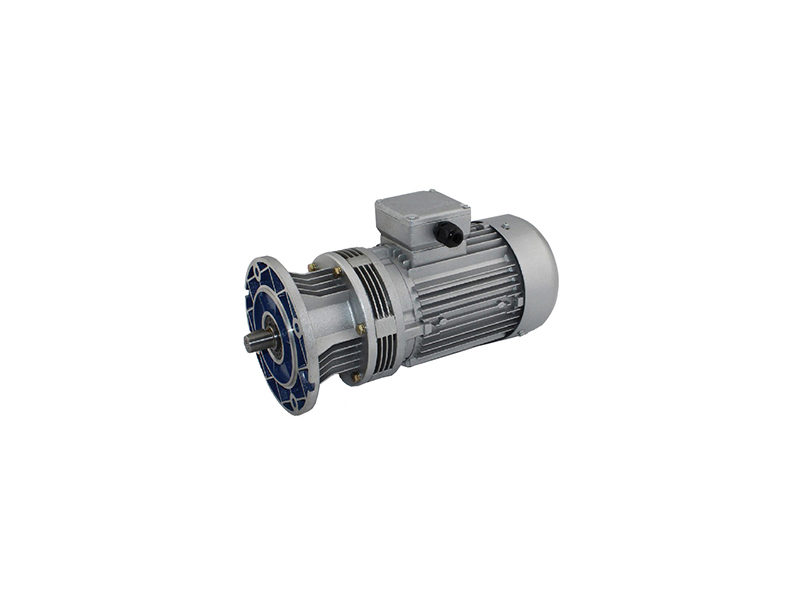
Superior Load Distribution and Torque Capacity
Multi-Point Contact Mechanics
Cycloidal gears achieve simultaneous contact between 30-50% of available teeth at any moment. This contrasts sharply with involute gears where typically 1-3 tooth pairs carry loads. The distributed loading reduces contact stresses by 60-75% compared to conventional gear systems. Lower stress levels enable smaller gearbox dimensions for equivalent torque ratings. This fundamental mechanical advantage translates to higher torque density measured in Nm per kilogram of reducer weight.
Load distribution characteristics improve reliability and extend service life significantly. Individual tooth failures rarely cause catastrophic system failures. The remaining teeth continue supporting loads allowing gradual degradation rather than sudden failure. This graceful failure mode proves valuable in critical applications where unexpected downtime creates substantial costs. Maintenance teams can plan replacement during scheduled shutdowns rather than responding to emergency failures.
A semiconductor manufacturing equipment supplier transitioned to cycloidal reducers in their wafer handling robots in 2023. Previous planetary gear systems experienced occasional tooth failures requiring immediate production shutdowns. Over 18-month operations with 45 robots, the cycloidal systems showed zero catastrophic gear failures. Minor wear patterns developed gradually allowing planned maintenance during scheduled production breaks. Equipment availability improved from 94.2% to 98.7%. The enhanced reliability justified 35% higher initial reducer costs through avoided downtime worth $2.3 million annually.
Compact High-Torque Design Benefits
Torque density represents a critical advantage in space-constrained applications. Cycloidal reducers typically deliver 2-3 times higher torque capacity than planetary gears of equivalent size. A 100mm diameter cycloidal reducer commonly handles 200-400 Nm continuous torque. Comparable planetary units manage 80-150 Nm. This enables significant downsizing in robotic joints, machine tool drives, and material handling equipment.
Weight reduction accompanies size reduction delivering additional system benefits. Lower moving masses reduce energy consumption during acceleration and deceleration cycles. Dynamic performance improves through reduced inertia. A collaborative robot manufacturer redesigned their joint drives using cycloidal reducers in 2024. Average joint weight decreased 28% compared to previous harmonic drive designs. Payload capacity increased from 5kg to 7kg without changing structural components. The improved power-to-weight ratio enabled faster cycle times increasing production throughput by 12%.
Space efficiency proves particularly valuable in multi-axis robotic systems. Each joint requiring motion control benefits from compact reducer packaging. Total robot size reduction enables operation in tighter workspace envelopes. Manufacturing facilities achieve higher equipment density without compromising access for maintenance and operation. An automotive assembly plant retrofitted 24 welding robots with cycloidal reducer technology. Tighter robot spacing increased workstation density by 18%. The plant added 3 additional vehicle bodies per shift without facility expansion. Annual production capacity increased 840 units justifying $680,000 retrofit investment within 14 months.
Exceptional Precision and Backlash Control
Near-Zero Backlash Performance
Backlash elimination stands among the most significant cycloidal gear benefits for precision applications. Standard configurations achieve 1-3 arc-minutes backlash through manufacturing precision alone. Adjustable designs incorporate split discs or spring-loaded mechanisms reducing backlash below 1 arc-minute. Some premium units guarantee less than 0.5 arc-minutes throughout rated service life. This precision level proves critical for semiconductor equipment, medical robotics, and precision machine tools.
Low backlash directly improves positioning accuracy and repeatability. Motion control systems achieve commanded positions without mechanical play absorbing intended movements. This eliminates “lost motion” plaguing conventional gear systems. Servo system tuning becomes simpler without compensating for backlash variations. Control loop gains can be increased improving dynamic response without inducing oscillations from mechanical compliance.
A medical robotics manufacturer developing surgical assistance robots specified cycloidal reducers for all joint actuators. Their application required positioning repeatability within ±0.1mm at a 500mm working radius. This translated to approximately 1 arc-minute angular repeatability requirements. Initial planetary reducer prototypes demonstrated 4-6 arc-minute backlash causing unacceptable positioning errors. Cycloidal reducers with 0.8 arc-minute guaranteed backlash met specifications with margin. Clinical testing showed consistent positioning performance over 50,000 cycle durability trials. The technology enabled FDA approval for their surgical robotics platform entering a $40 million annual market.
Torsional Stiffness and Dynamic Response
High torsional stiffness represents another precision benefit of cycloidal gear technology. The multi-contact load path creates rigid mechanical connection between input and output shafts. Measured torsional stiffness typically ranges from 5-15 Nm/arc-minute depending on reducer size. This exceeds planetary gears by 50-80% in comparable sizes. High stiffness reduces wind-up under load improving positioning accuracy and enabling aggressive servo tuning.
Dynamic response characteristics significantly impact machine performance. Stiff mechanical systems exhibit higher natural frequencies reducing settling times after commanded movements. This enables faster machine cycles without sacrificing accuracy. Frequency response analysis shows cycloidal reducers typically demonstrate first resonance modes at 80-120 Hz in robotic joint applications. Comparable planetary systems show resonances at 45-70 Hz limiting achievable bandwidth.
An automated inspection system manufacturer upgraded their precision positioning stages from belt drives to cycloidal reducer-driven systems in 2023. Testing showed 65% reduction in settling time after 100mm index movements. Cycle time decreased from 2.8 seconds to 1.2 seconds per inspection point. Daily throughput increased from 14,500 to 31,000 parts inspected. The inspection system cost increased $85,000 for eight positioning axes. Additional revenue from doubled capacity exceeded $420,000 annually. Return on investment achieved in 2.4 months with continuing productivity benefits.
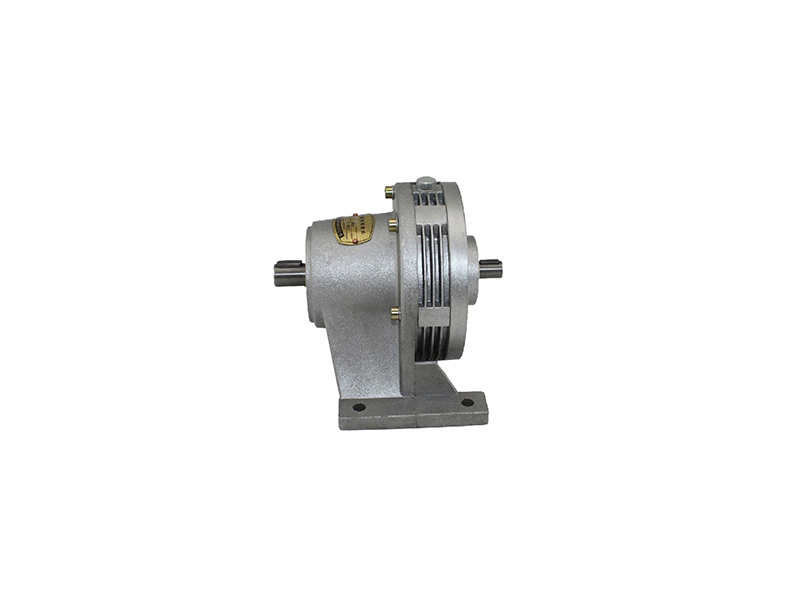
Outstanding Shock Load and Overload Protection
Impact Load Absorption Capability
Cycloidal gears demonstrate exceptional resistance to shock loads and impact forces. The multi-point contact distributes sudden loads across numerous engagement points. This prevents localized overload conditions that fracture conventional gear teeth. Rated shock load capacity typically reaches 300-500% of continuous torque rating. Some designs withstand instantaneous peaks exceeding 1000% rated torque without damage.
This shock load capability protects both the reducer and connected equipment. Emergency stops, workpiece collisions, or sudden load changes do not immediately destroy the gearbox. Equipment continues operating after shock events that would fail alternative reducer technologies. Maintenance intervals extend as shock loads cause minimal incremental wear. Overall system reliability improves significantly in applications experiencing frequent impact loading.
A metal stamping facility operates 12 mechanical presses fitted with cycloidal reducers driving the ram positioning system. Press operations involve substantial shock loads during each stamping cycle. Previous worm gear reducers required replacement every 8-12 months due to tooth wear and damage. Cycloidal units installed in 2022 continue operating without failure after 24 months. Annual maintenance costs decreased from $84,000 to $12,000 across the 12-press line. Production uptime improved from 91% to 97.5%. The facility invested $180,000 in cycloidal reducer upgrades. Payback achieved within 18 months through reduced maintenance and improved availability.
Overload Protection Characteristics
Gradual degradation under overload conditions represents a valuable safety characteristic. Cycloidal reducers do not typically experience sudden catastrophic failures. Excessive loads cause gradual wear across multiple contact surfaces. Performance slowly deteriorates providing operators warning before complete failure occurs. This contrasts with involute gears where single tooth fractures immediately disable equipment.
Built-in overload protection eliminates separate safety devices in many applications. The cycloidal mechanism inherently limits transmitted torque through contact surface friction. Extreme overloads cause the cycloidal disc to slip against the pins preventing damage to motor or driven equipment. This mechanical fuse function protects expensive components from destruction during fault conditions. Recovery occurs automatically when overload conditions clear without requiring component replacement.
According to industrial safety standards, mechanical overload protection devices reduce equipment damage costs by 40-60% in automated production environments. A packaging machinery manufacturer integrated cycloidal reducers into their case erecting equipment. Jam conditions occasionally occurred when improperly formed cartons entered the machinery. Previous systems with planetary reducers suffered motor or reducer failures requiring 4-6 hour repairs. Cycloidal systems automatically limit torque during jams preventing damage. Operators clear the jam and resume production within 5 minutes. Annual equipment damage costs decreased 78% from $125,000 to $27,500 after cycloidal reducer implementation.
High Mechanical Efficiency and Energy Savings
Efficiency Characteristics Across Operating Ranges
Mechanical efficiency directly impacts energy consumption and heat generation. Cycloidal reducers typically achieve 85-92% single-stage efficiency. This approaches or exceeds planetary gear efficiency while significantly surpassing worm gear systems. Two-stage cycloidal units maintain 75-85% efficiency substantially better than dual-worm configurations. The efficiency advantage reduces operating costs while improving thermal performance.
Efficiency remains relatively constant across the speed range. Many gear types demonstrate reduced efficiency at low speeds due to lubrication film breakdown. Cycloidal gears maintain rolling contact geometry supporting hydrodynamic lubrication even at low speeds. This characteristic proves valuable in servo applications requiring consistent performance across wide speed ranges. Predictable efficiency simplifies thermal management and energy consumption calculations.
A solar tracking system manufacturer compared drive options for their large-scale array positioners. Each tracker controls 120 square meters of solar panels rotating to follow the sun. Previous worm gear systems demonstrated 55-65% efficiency requiring 1.2 kW input power for positioning loads. Cycloidal reducers achieved 88% efficiency reducing power requirements to 0.68 kW. Across a 50 MW solar farm with 1,200 trackers, annual energy savings exceeded 18,000 kWh. At $0.12 per kWh, this generated $2,160 annual savings. The cycloidal systems cost $85,000 more than worm alternatives. Energy savings achieved payback in 39 years while also improving positioning accuracy and maintenance intervals.
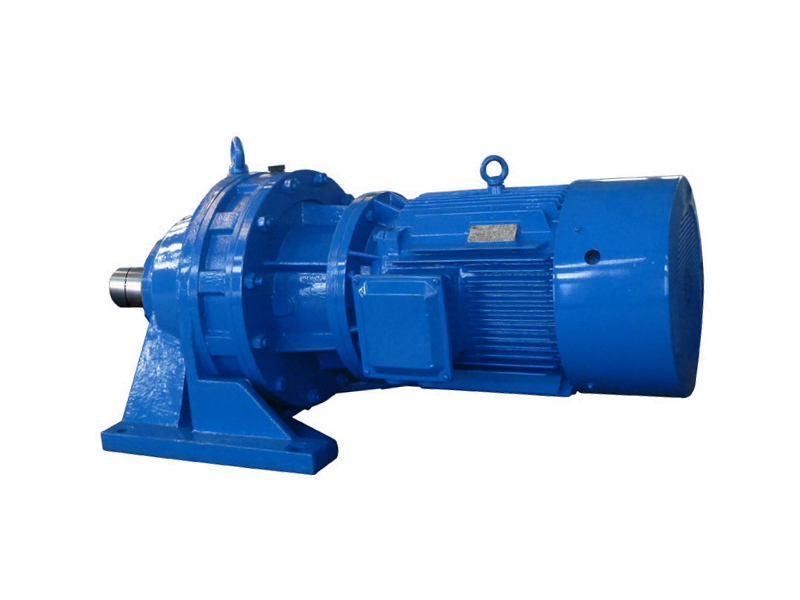
Thermal Performance and Cooling Requirements
Lower power loss translates directly to reduced heat generation. Heat dissipation requirements decrease proportionally to efficiency improvements. Smaller cooling systems or even natural convection cooling becomes feasible. This eliminates fans, pumps, or heat exchangers reducing system complexity and improving reliability. Acoustic noise decreases without cooling fan operation.
Reduced operating temperatures extend lubricant life and component service intervals. Many bearing and seal failures result from excessive temperatures. Keeping components cooler significantly improves reliability and reduces maintenance frequency. A CNC machine tool builder redesigned their spindle drives using cycloidal reducers in 2023. Operating temperatures decreased from 75°C to 48°C under continuous duty. Lubricant change intervals extended from 2,000 to 5,000 operating hours. Bearing life projections increased 60% based on reduced temperature stress. Annual maintenance costs per machine decreased $1,840 through extended service intervals.
Smooth Operation and Reduced Vibration
Low Vibration Characteristics
Cycloidal gear mechanisms generate significantly lower vibration levels compared to involute gear systems. The continuous engagement pattern eliminates the impact forces occurring when conventional gear teeth enter mesh. Multiple simultaneous contacts dampen vibration transmission from input to output. Measured vibration levels typically run 40-60% lower than comparable planetary or spur gear systems.
Reduced vibration improves machine accuracy and part quality. Vibration-induced positioning errors decrease or disappear entirely. Surface finish quality improves in machining operations. Assembly accuracy increases in pick-and-place robotics. These quality improvements often justify cycloidal reducer premiums through reduced scrap rates and improved customer satisfaction. According to precision manufacturing research, vibration reduction below 0.5g RMS enables 25-40% tighter manufacturing tolerances without process changes.
A precision grinding machine manufacturer switched to cycloidal drives for their wheel dressing mechanisms. Previous belt drive systems generated vibration affecting ground surface finishes. Cycloidal direct drives reduced measured vibration from 1.8g RMS to 0.3g RMS. Ground surface roughness improved from Ra 0.8μm to Ra 0.4μm. This enabled the machines to compete in higher-precision markets. Average machine selling price increased $45,000 while manufacturing cost rose only $12,000. Profit margins improved substantially while customer satisfaction scores increased from 7.2 to 9.1 out of 10.
Acoustic Noise Reduction
Lower vibration directly contributes to reduced acoustic noise. Cycloidal reducers operate noticeably quieter than alternative technologies. Typical sound pressure levels measure 58-68 dB(A) at 1 meter distance during operation. Comparable planetary systems generate 72-78 dB(A) while worm gears reach 75-82 dB(A). The 10-15 dB reduction represents subjectively “half as loud” perception by human operators.
Quiet operation improves working environments and reduces hearing protection requirements. Many facilities seek equipment generating less than 70 dB(A) to eliminate mandatory hearing protection programs. Cycloidal technology helps achieve these targets without acoustic enclosures. Collaborative robots particularly benefit as they operate in close proximity to human workers. Lower noise levels reduce operator fatigue and improve workplace satisfaction.
A pharmaceutical packaging line operates in a clean room environment with strict noise limitations. Previous planetary gear-driven robots exceeded 75 dB(A) requiring all personnel to wear hearing protection. This created communication difficulties and reduced compliance. New collaborative robots using cycloidal reducers measured 62 dB(A) eliminating hearing protection requirements. Operator feedback indicated reduced fatigue and improved team communication. Productivity measurements showed 8% improvement attributed to better working conditions. The quieter robots cost $28,000 more across 6 units. Improved productivity generated $156,000 annual value through increased throughput.
Exceptional Reliability and Service Life
Extended Component Durability
Distributed loading and reduced stress concentrations directly translate to extended component life. Bearing loads spread across multiple support points reducing individual bearing stress. Cycloidal disc contact surfaces experience moderate pressures enabling very long wear life. Properly maintained units routinely achieve 30,000-50,000 operating hours before major service. Some industrial applications report 100,000+ hours operation in favorable conditions.
Predictable wear patterns enable condition-based maintenance optimization. Components degrade gradually rather than failing suddenly. Vibration analysis and lubricant sampling provide early warning of developing problems. Maintenance can be scheduled during planned production breaks rather than responding to unexpected failures. This predictability proves extremely valuable in continuous process industries where unplanned downtime creates severe financial consequences.
A steel rolling mill operates cycloidal reducers on their roller table positioning drives. These units handle substantial shock loads during hot steel slab positioning. Initial installation in 2019 included 16 reducers across the roller table. Through 2024, all units remain in service with only routine lubrication maintenance. Operating hours range from 28,000 to 34,000 across the population. Vibration monitoring shows normal wear patterns well within acceptable limits. Previous planetary systems required first major repairs at 12,000-15,000 hours. Extended service life reduced annual maintenance costs by $125,000 while improving line availability.
Maintenance Requirements and Service Intervals
Reduced maintenance requirements represent significant lifecycle cost advantages. Cycloidal reducers typically need only periodic lubrication and seal inspection. Major overhauls occur at multiples of competitive technologies’ service intervals. Simplified maintenance procedures reduce required technician skill levels. Some facilities shift routine cycloidal reducer maintenance from specialized technicians to operators performing autonomous maintenance programs.
Lubricant service intervals extend significantly compared to alternative technologies. Many cycloidal applications specify 5,000-10,000 hour oil change intervals. Some sealed-for-life designs eliminate field lubrication entirely. Extended intervals reduce both material costs and maintenance labor. Facilities with large installed populations realize substantial savings through reduced maintenance frequency.
A food processing facility operates 180 conveyor drive systems using cycloidal reducers. Maintenance procedures include oil changes every 8,000 operating hours and bearing replacement at 40,000 hours. Previous worm gear systems required oil changes every 2,000 hours and rebuilds at 15,000 hours. Annual maintenance labor decreased from 2,400 hours to 720 hours. At $85/hour fully-burdened labor rates, this generated $142,800 annual savings. Lubricant costs decreased $28,000 annually. Combined savings exceeded $170,000 annually. The cycloidal reducers cost $520,000 more than worm alternatives initially. Maintenance savings achieved payback within 3.1 years with 20+ year expected service life.
Versatile Industrial Applications
Robotics and Automated Equipment
Robotics represents the premier application domain for cycloidal reducer technology. Joint drives in industrial robots demand high torque density, zero backlash, and excellent shock load resistance. Cycloidal reducers excel in all these requirements. Six-axis industrial robots typically employ 3-6 cycloidal reducers in shoulder, elbow, and wrist joints. Collaborative robots often specify cycloidal technology for all axes including lighter payload applications.
Precision positioning requirements in semiconductor and electronics manufacturing drive cycloidal adoption. Pick-and-place machines handling tiny components require sub-millimeter positioning accuracy. Cycloidal reducers enable these accuracy targets while maintaining high throughput. An electronics contract manufacturer operates 45 surface mount placement machines using cycloidal reducer technology. Average placement accuracy measures ±0.08mm across 1.2 million placements daily. Previous systems using belt drives achieved only ±0.15mm accuracy limiting product types. Enhanced accuracy enabled contracts for high-density circuit boards increasing annual revenue $3.8 million.
Machine Tools and Metal Working Equipment
CNC machine tools increasingly specify cycloidal reducers for rotary table drives and tool changers. High rigidity and low backlash directly improve machining accuracy and surface finish. Shock load resistance proves valuable during interrupted cutting operations. A aerospace parts machining facility upgraded 8 five-axis mills with cycloidal-driven rotary tables in 2024. Achievable tolerances improved from ±0.02mm to ±0.008mm for complex contoured surfaces. Scrap rates decreased from 3.2% to 0.8%. Improved yields generated $840,000 annual value. The cycloidal systems cost $320,000 across the 8 machines. Payback achieved within 5 months through improved quality.
Metal forming equipment benefits from cycloidal technology’s shock load capabilities. Press brake back gauge drives experience substantial impact forces during rapid positioning. Previous servo motor and ball screw systems suffered frequent drive failures. A sheet metal fabricator replaced 12 back gauge drives with cycloidal reducer systems. Drive failures decreased from 4.2 per year to zero over 24-month operations. Maintenance costs dropped $68,000 annually. Improved reliability enabled more aggressive production scheduling increasing throughput by 7%.
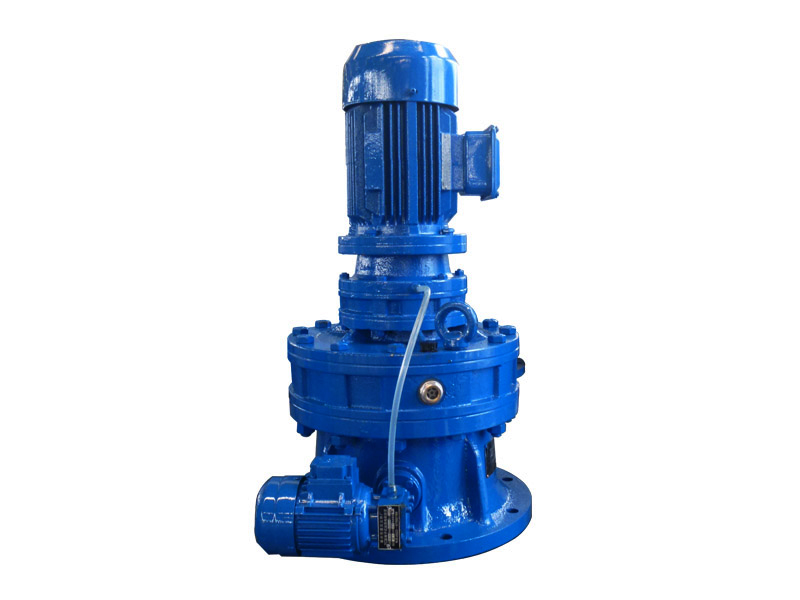
Material Handling and Conveyor Systems
Conveyor drive applications leverage cycloidal reducers’ compact size and high shock load capacity. Package handling conveyors experience frequent start-stop cycles and occasional overloads from jams. Cycloidal drives handle these conditions reliably without damage. A distribution center operates 85 conveyor systems driven by cycloidal reducers. Emergency stop events occur 15-25 times daily across the system without causing equipment damage. Previous chain drive systems frequently required sprocket replacement after emergency stops. Annual drive system maintenance costs decreased 62% after cycloidal implementation.
AGV and mobile robot drives increasingly specify cycloidal reducers. Compact packaging fits within wheel assemblies while delivering sufficient torque. A warehouse automation provider designed their AGV platform around cycloidal hub drives. Each AGV wheel incorporates a self-contained motor-reducer unit. The design eliminated separate drivetrain components reducing vehicle size 18%. Reduced footprint enabled aisle width reduction from 2.8m to 2.3m. Warehouse storage density increased 12% without facility expansion. The innovation helped secure $45 million in new warehouse system contracts.
Renewable Energy Systems
Wind turbine pitch and yaw control systems represent emerging cycloidal applications. Blade pitch actuators require high torque, weather resistance, and extreme reliability. Cycloidal reducers meet all requirements while offering compact installation. A wind turbine manufacturer adopted cycloidal pitch drives across their 3MW turbine platform in 2023. Field data from 280 turbines over 18 months showed zero pitch drive failures. Previous planetary systems experienced 2.8% annual failure rates requiring expensive offshore repairs. Improved reliability increased energy production by 1.2% through reduced downtime. For a 100-turbine wind farm, increased generation yielded $380,000 additional annual revenue.
Solar tracking systems utilize cycloidal reducers for their efficiency and weather resistance. The technology’s ability to handle wind-induced shock loads proves critical. According to renewable energy engineering studies, advanced tracking systems improve solar capture by 25-35% compared to fixed installations. Reliable drive systems enable these gains without excessive maintenance costs.
Cost-Benefit Analysis and Return on Investment
Initial Investment Considerations
Cycloidal reducers typically cost 25-50% more than comparable planetary gear systems. Premium pricing reflects sophisticated manufacturing requirements and superior performance characteristics. A basic 11:1 ratio cycloidal reducer in 100mm frame size costs approximately $1,200-$1,800. Equivalent planetary units range from $800-$1,200. Higher ratios and larger sizes show similar percentage premiums. Custom configurations or special features increase costs further.
Initial cost barriers sometimes prevent cycloidal adoption despite technical advantages. Purchase price comparison alone overlooks substantial lifecycle benefits. Total cost of ownership analysis reveals true economic value. Engineers must quantify benefits including extended service life, reduced maintenance, improved productivity, and enhanced reliability. These factors often overwhelm initial price differences over equipment lifecycle.
System-level analysis may reveal overall cost reductions despite higher reducer prices. Compact cycloidal packaging enables smaller motors delivering equivalent output torque. Total drive system costs can be lower than alternatives requiring larger motors and support structure. A mobile robot manufacturer optimized their drive design around cycloidal reducers. Smaller motor selection saved $380 per robot while the cycloidal reducer added $240. Net system cost decreased $140 per unit while improving performance. Across 2,500 annual production volume, savings exceeded $350,000 annually.
Lifecycle Cost Advantages
Extended service life and reduced maintenance substantially lower lifecycle costs. Cycloidal reducers operating 40,000 hours before major service compare favorably with planetary units requiring attention at 15,000 hours. Over 20-year equipment life, cycloidal technology requires fewer overhauls and component replacements. Reduced downtime for maintenance activities adds indirect value through improved production availability.
Energy efficiency improvements generate ongoing operational savings. A 3 kW application operating 6,000 hours annually consuming 10% less power saves 1,800 kWh yearly. At $0.12 per kWh, annual savings reach $216. Over 15-year equipment life, cumulative energy savings total $3,240. This offsets 65-100% of typical cycloidal premium pricing through energy savings alone. Additional benefits from maintenance and reliability compound the economic advantages.
A complete economic analysis at an automotive tier-1 supplier compared drive technologies for their robotic welding cells. Initial analysis showed planetary systems cost $145,000 per cell versus $185,000 for cycloidal alternatives. Lifecycle modeling over 12-year horizon included energy costs, maintenance, downtime, and reliability factors. Net present value calculation showed cycloidal systems delivered $68,000 greater value per cell. The facility proceeded with cycloidal specification across 18 welding cells. Superior long-term economics justified $720,000 additional initial investment.
Price Disclaimer: All pricing information represents approximate market rates as of 2025. Actual costs vary significantly based on specifications, quantities, manufacturers, and geographic regions. Consult suppliers and manufacturers for current quotations specific to your application requirements and volume.
Technical Disclaimer: This guide provides general technical information for educational purposes. Specific performance characteristics vary by manufacturer, model, and application conditions. Always consult manufacturer specifications, application engineers, and relevant industry standards for proper selection and implementation. Performance claims represent typical values and may not apply to all configurations or operating conditions.
Conclusion: Strategic Implementation of Cycloidal Gear Technology
Cycloidal gears deliver measurable performance advantages across multiple dimensions including torque density, precision, efficiency, reliability, and shock load resistance. These benefits translate to improved machine performance, reduced maintenance costs, and enhanced productivity. Applications demanding high precision, compact packaging, or superior reliability particularly benefit from cycloidal technology. Initial cost premiums prove justified through lifecycle value analysis considering all relevant economic factors.
Successful implementation requires careful application analysis and proper system integration. Engineers must evaluate load requirements, duty cycles, environmental conditions, and performance specifications. Manufacturer consultation ensures optimal product selection and configuration. Proper installation, lubrication, and maintenance maximize performance and service life. Organizations embracing cycloidal technology gain competitive advantages through improved equipment capabilities and reduced operational costs.
Free Technical Consultation: Need assistance evaluating cycloidal gear benefits for your specific application? Experienced application engineers provide complimentary consultations covering performance analysis, product selection, system integration, and economic justification. Contact technical support teams to discuss your requirements and receive expert recommendations ensuring optimal drive system design and maximum return on investment.