
Worm Gear vs Helical Gear vs Planetary Gear Reducers Comparison
Understanding the Critical Choice Among Gear Reducer Types
Selecting the appropriate gear reducer type represents one of the most consequential decisions in industrial equipment design and procurement. The wrong choice can lead to premature equipment failure, excessive energy consumption, and costly operational disruptions. Conversely, the right selection optimizes performance, minimizes maintenance requirements, and delivers substantial cost savings over the equipment’s operational lifetime.
Three primary gear reducer types dominate industrial applications: worm gear reducers, helical gear reducers, and planetary gear reducers. Each technology offers distinct advantages and limitations that make it ideal for specific operating conditions. Industry data from the American Gear Manufacturers Association indicates that proper gear reducer selection can improve system efficiency by 15-25% while extending equipment lifespan by 30-40% compared to mismatched applications.
The challenge facing engineers and purchasing managers extends beyond simply comparing technical specifications. Real-world performance depends on numerous factors including load characteristics, duty cycles, environmental conditions, space constraints, and budget considerations. Furthermore, emerging technologies and manufacturing improvements continue to blur traditional distinctions between gear reducer types, making informed selection increasingly complex.
This comprehensive analysis examines the fundamental operating principles, performance characteristics, and optimal applications for each major gear reducer type. Moreover, we’ll explore real-world case studies demonstrating how businesses across various industries have optimized their equipment through strategic gear reducer selection. By understanding the nuanced differences between worm gear, helical gear, and planetary gear reducers, you’ll be equipped to make confident decisions that align with your specific operational requirements.
Worm Gear Reducers: High Ratio Reduction in Compact Packages
Operating Principles and Design Characteristics
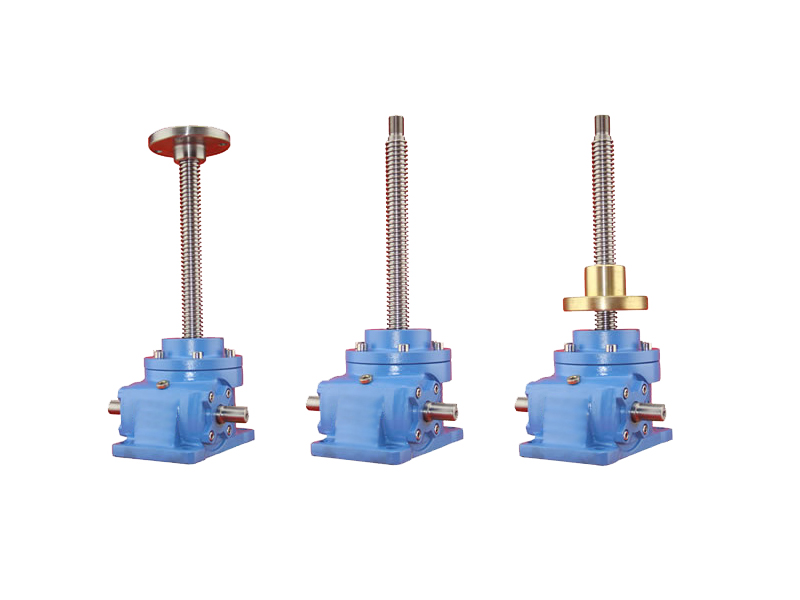
Worm gear reducers utilize a unique power transmission mechanism featuring a worm (resembling a screw thread) that meshes with a worm wheel (a specialized gear). This configuration enables extremely high reduction ratios in a single stage—typically ranging from 5:1 to 100:1, with some specialized units achieving ratios up to 300:1. The worm gear reducer’s compact design makes it particularly attractive for space-constrained applications.
The fundamental operating principle involves sliding contact between the worm and wheel, contrasting with the rolling contact found in other gear reducer types. Specifically, as the worm rotates, its threads push against the wheel teeth, generating rotational motion at significantly reduced speed and increased torque. This sliding action creates higher friction compared to other gear reducer types, directly impacting efficiency and heat generation.
Efficiency and Performance Characteristics
Worm gear reducers typically operate at 50-90% efficiency, with exact performance depending on reduction ratio, worm lead angle, and lubrication quality. Single-reduction worm gearboxes with ratios between 5:1 and 20:1 generally achieve 70-90% efficiency. However, efficiency decreases as reduction ratios increase—units with 60:1 ratios often operate at only 50-60% efficiency.
The sliding contact mechanism generates substantial heat during operation, particularly under continuous duty or high-load conditions. Consequently, many worm gear reducer applications require additional cooling provisions or oversized units to manage thermal loads. Temperature rises of 40-60°F above ambient are common in industrial worm gear reducers operating at full rated capacity.
Unique Advantages and Self-Locking Capability
One distinctive advantage of worm gear reducers is their inherent self-locking capability. When the worm lead angle falls below a critical threshold (typically 5-7 degrees), the system becomes non-backdrivable. This means the worm wheel cannot drive the worm in reverse, effectively creating a mechanical brake. This self-locking feature proves invaluable in applications requiring load holding without external brakes, such as lifting equipment, conveyor systems, and positioning mechanisms.
Additionally, worm gear reducers operate remarkably quietly compared to other gear reducer types. The sliding contact produces less vibration and noise than the meshing action in spur or helical gears. Sound levels typically measure 10-15 decibels lower than comparable helical gear reducers, making worm gearboxes ideal for noise-sensitive environments.
Optimal Applications and Limitations
Worm gear reducers excel in specific application profiles. They prove ideal for high-reduction-ratio requirements in compact spaces, particularly when self-locking capability provides value. Common applications include:
- Material handling equipment (conveyors, lifts, hoists)
- Positioning systems requiring load holding
- Packaging machinery
- Food processing equipment
- Small-scale automation systems
However, several limitations constrain worm gear reducer applications. Lower efficiency compared to other gear reducer types results in higher operating costs in continuous-duty applications. The substantial heat generation requires careful thermal management. Moreover, the sliding contact accelerates wear on bronze worm wheels, potentially requiring more frequent replacement than other gear reducer types.
A packaging equipment manufacturer in Wisconsin documented their experience comparing worm gear and helical gear reducers for a conveyor application. Initially, they selected worm gear reducers for their compact size and self-locking capability. However, after calculating energy consumption over the equipment’s expected 10-year lifespan, they determined that the 30% lower efficiency would cost approximately $8,000 per unit in additional electricity expenses. Therefore, they switched to helical gear reducers with external brakes, achieving ROI on the higher initial investment within 3 years through energy savings alone.
Helical Gear Reducers: Efficiency and Versatility for Industrial Applications
Design and Operating Principles
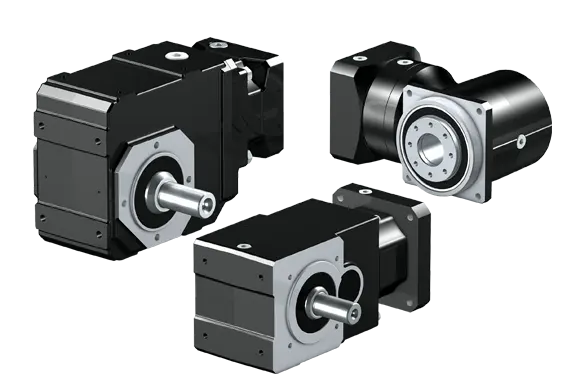
Helical gear reducers utilize gears with teeth cut at an angle to the gear axis, creating a helical or spiral pattern. This design contrasts with straight-cut spur gears and offers significant performance advantages. As helical gears mesh, contact begins gradually across the tooth face rather than impacting suddenly across the full tooth width. Consequently, this results in smoother, quieter operation compared to spur gears.
The helical gear configuration enables higher load capacity and improved efficiency compared to worm gear reducers. Multiple teeth remain in contact simultaneously during operation, distributing loads across a larger surface area. This load distribution reduces stress concentrations and extends gear life. Furthermore, helical gears can be manufactured with high precision, enabling tight tolerance control and reliable performance.
Efficiency and Performance Advantages
Helical gear reducers typically achieve 94-98% efficiency per stage, substantially higher than worm gear alternatives. This efficiency advantage stems from rolling contact between gear teeth rather than sliding contact. Multi-stage helical gear reducers maintain excellent efficiency—a two-stage unit typically operates at 88-96% overall efficiency, while three-stage units still achieve 83-94% efficiency.
The superior efficiency translates directly into reduced energy consumption and lower operating temperatures. A helical gear reducer operating at 95% efficiency converts only 5% of input power to heat, compared to 20-30% heat generation in typical worm gear reducers. Consequently, helical units require less cooling capacity and operate within lower temperature ranges, improving lubricant life and component longevity.
Load Capacity and Durability
Helical gear reducers deliver exceptional load capacity relative to their physical size. The multiple-tooth contact pattern distributes loads effectively, enabling these units to handle higher shock loads and overload conditions than worm gear reducers of comparable dimensions. Rated torque capacities for helical gear reducers typically exceed worm gear equivalents by 30-50% in similar frame sizes.
Additionally, the rolling contact mechanism produces less wear than sliding contact in worm gears. Steel-on-steel tooth contact (versus bronze-on-steel in worm gears) provides superior wear resistance and extends service life. Industry experience suggests helical gear reducers commonly operate 15-20 years in industrial applications, while worm gear reducers in similar service often require major component replacement after 8-12 years.
Application Versatility and Configuration Options
Helical gear reducers offer exceptional versatility through various mounting configurations and shaft arrangements. Available in inline, parallel shaft, and right-angle configurations, helical gear reducers adapt to diverse layout requirements. Moreover, manufacturers offer modular designs that combine helical stages with bevel gears or worm stages, creating hybrid units optimizing specific performance characteristics.
The versatility extends to reduction ratio options. While single-stage helical gear reducers typically provide ratios from 3:1 to 10:1, multi-stage configurations achieve ratios up to 200:1 or higher. This flexibility enables engineers to optimize gear reducer selection for specific speed and torque requirements without compromising efficiency.
Optimal Applications and Considerations
Helical gear reducers prove ideal for applications prioritizing efficiency, reliability, and load capacity. Common applications include:
- Heavy industrial machinery (mills, crushers, mixers)
- Mining and aggregate equipment
- Wind turbines and renewable energy systems
- Steel production and metal processing
- Chemical and petrochemical processing
- Marine propulsion systems
However, helical gear reducers lack the self-locking capability inherent in worm designs. Applications requiring load holding must incorporate external brakes or backstops. Additionally, while helical gear reducers operate more quietly than spur gears, they typically generate more noise than worm gear reducers—though advances in precision manufacturing have substantially reduced this differential.
A steel processing facility in Pennsylvania replaced aging worm gear reducers with helical gear units on their rolling mill equipment. The initial investment was 40% higher than replacing with equivalent worm gear reducers. However, the facility documented 22% reduction in energy consumption, 35% decrease in maintenance requirements, and elimination of three annual production stoppages for worm wheel replacement. The comprehensive payback period measured 18 months, with ongoing annual savings exceeding $45,000 per unit.
Planetary Gear Reducers: Compact Power Density and Precision Performance
Unique Design Architecture
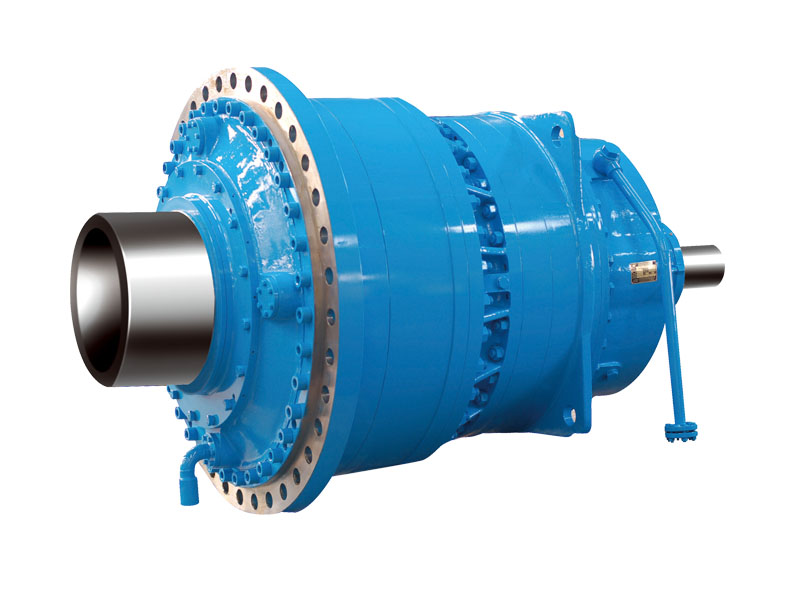
Planetary gear reducers employ a distinctive configuration featuring a central sun gear surrounded by multiple planet gears, all contained within an outer ring gear. This arrangement resembles planets orbiting the sun, hence the name. The planet gears rotate on a carrier that connects to the output shaft, while the ring gear typically remains stationary (though some designs fix the carrier and allow the ring gear to rotate for output).
This architecture delivers remarkable power density—the ability to transmit high torque through compact dimensions. The load distributes across multiple planet gears simultaneously, enabling planetary gear reducers to handle substantially higher torque than comparably sized helical or worm gear reducers. Typically, 3-4 planet gears share the load, though some heavy-duty units incorporate 5-6 planets for maximum capacity.
Exceptional Efficiency and Power Density
Planetary gear reducers achieve outstanding efficiency ratings, typically 95-98% per stage. This efficiency level matches or slightly exceeds helical gear reducers while delivering the power in significantly smaller packages. Multi-stage planetary gear reducers maintain excellent efficiency—three-stage units commonly operate at 90-94% overall efficiency.
The power density advantage proves substantial. Planetary gear reducers can transmit 2-3 times more torque than helical gear reducers of equivalent size, or alternatively, deliver equivalent torque in 50-60% less space and weight. This compactness proves particularly valuable in mobile equipment, robotics, and aerospace applications where weight and space constraints dominate design decisions.
Precision and Smooth Operation
The symmetrical load distribution in planetary gear reducers minimizes shaft deflection and bearing loads. Consequently, these units deliver exceptional precision and repeatability, making them ideal for positioning applications and precision machinery. Backlash in high-quality planetary gear reducers measures less than 3-5 arc-minutes, compared to 10-20 arc-minutes typical in helical gear reducers.
Furthermore, planetary gear reducers operate smoothly with minimal vibration. The balanced configuration inherently cancels many vibration modes that affect other gear reducer types. This smooth operation extends bearing life, reduces noise levels, and improves system reliability. Sound levels typically measure comparable to helical gear reducers and quieter than spur gear alternatives.
Reduction Ratio Capabilities
Single-stage planetary gear reducers typically provide reduction ratios from 3:1 to 10:1. Multi-stage configurations achieve much higher ratios—two-stage units commonly reach 100:1, while three-stage designs can deliver 300:1 or higher. Moreover, the modular architecture enables engineers to combine stages optimally for specific ratio requirements without sacrificing efficiency or compactness.
Some planetary gear reducer designs incorporate compound planet gears (planet gears with two different diameters) to achieve higher ratios in fewer stages. These configurations can deliver 25:1 or higher in a single stage, though they typically cost more than simple planetary designs.
Optimal Applications and Investment Considerations
Planetary gear reducers excel in applications where compactness, precision, and power density justify premium pricing. Common applications include:
- Robotics and automation systems
- Machine tool spindle drives and servo applications
- Aerospace and defense equipment
- Mobile equipment and construction machinery
- Wind turbine pitch and yaw drives
- High-performance industrial machinery
However, planetary gear reducers command significantly higher prices than helical or worm gear alternatives. Costs typically run 2-4 times higher than comparable helical gear reducers, though the differential narrows when comparing power density (cost per unit torque capacity). Additionally, planetary gear reducers require precise manufacturing and assembly, making field repair more challenging and often necessitating factory rebuilds.
A robotics manufacturer in Massachusetts compared gear reducer options for a precision positioning application. While helical gear reducers met the torque requirements, the physical size proved incompatible with their compact robot arm design. Worm gear reducers offered sufficient compactness but lacked the precision and efficiency required. Planetary gear reducers delivered all necessary performance characteristics in an acceptable package size. Despite costing 3.5 times more than helical alternatives, the planetary design enabled a successful product that generated substantial market success, demonstrating that gear reducer selection must consider the complete system context rather than component cost alone.
Comparative Performance Analysis: Key Selection Criteria
Efficiency Comparison Across Gear Reducer Types
Efficiency stands as a critical selection criterion, particularly for continuous-duty applications where energy costs accumulate over equipment lifetime. Planetary and helical gear reducers deliver comparable efficiency (94-98% per stage), substantially outperforming worm gear reducers (50-90% depending on ratio).
To quantify this difference, consider a 10 HP motor operating 8,000 hours annually. A helical gear reducer at 95% efficiency wastes 0.5 HP (373 watts), while a worm gear reducer at 65% efficiency wastes 3.5 HP (2,610 watts). At typical industrial electricity rates, this efficiency differential costs approximately $1,500-2,000 annually per unit. Over a 15-year equipment lifespan, the cumulative energy cost differential exceeds $20,000 per gear reducer.
Load Capacity and Torque Density
Planetary gear reducers deliver the highest torque density, transmitting 2-3 times more torque than helical or worm gear reducers of equivalent size. Helical gear reducers offer good torque capacity with excellent reliability. Worm gear reducers provide adequate torque capacity for many applications but generally lag behind helical alternatives in comparable frame sizes.
For applications with severe space constraints, planetary gear reducers often represent the only viable solution. However, when space permits, helical gear reducers deliver excellent torque capacity with lower cost and simpler maintenance.
Speed Reduction Capabilities
Worm gear reducers excel at high-ratio single-stage reduction, commonly achieving 20:1 to 100:1 in compact packages. Planetary gear reducers deliver moderate single-stage ratios (3:1 to 10:1) but achieve high overall ratios through compact multi-stage designs. Helical gear reducers require multiple stages for high ratios, increasing size and cost, though maintaining excellent efficiency.
For applications requiring ratios above 20:1, engineers must weigh the worm gear’s single-stage simplicity against the planetary or helical gear’s superior efficiency. The optimal choice depends on duty cycle, energy costs, and space constraints.
Precision and Backlash Considerations
Planetary gear reducers deliver the highest precision with minimal backlash (3-5 arc-minutes in quality units), making them ideal for positioning and servo applications. Helical gear reducers provide acceptable precision (10-20 arc-minutes) suitable for most industrial applications. Worm gear reducers typically exhibit higher backlash but offer zero backlash in self-locking configurations where the load cannot drive backward.
Applications requiring precise positioning or smooth motion control favor planetary gear reducers. General industrial drives accept helical gear reducer precision without performance compromise. Material handling and lifting applications often benefit from worm gear self-locking characteristics despite lower precision.
Noise and Vibration Characteristics
Worm gear reducers operate most quietly due to sliding tooth contact, typically 10-15 dB quieter than helical alternatives. Planetary and helical gear reducers produce comparable noise levels, both operating quietly in well-designed installations. Modern manufacturing precision has substantially reduced historical noise differentials between gear types.
Noise-sensitive environments (food processing, medical equipment, laboratory machinery) may favor worm gear reducers despite efficiency penalties. Industrial settings typically tolerate helical or planetary gear noise levels without issue.
Maintenance Requirements and Service Life
Helical and planetary gear reducers generally require less maintenance than worm gear alternatives. The rolling contact in helical and planetary designs produces minimal wear, enabling longer service intervals and extended component life. Worm gear reducers experience greater wear due to sliding contact, particularly on bronze worm wheels that may require replacement every 5-10 years in demanding applications.
Lubricant change intervals differ substantially. Helical and planetary gear reducers often operate 4,000-8,000 hours between oil changes, while worm gear reducers typically require service every 2,000-4,000 hours due to higher thermal stress on lubricants. However, worm gear reducers generally use less expensive industrial gear oils, while some planetary designs specify costly synthetic lubricants.
Decision Framework: Selecting the Optimal Gear Reducer Type
Application Analysis Methodology
Systematic gear reducer selection begins with comprehensive application analysis. Engineers must quantify key operational parameters including input speed, required output speed (or reduction ratio), torque requirements, duty cycle characteristics, environmental conditions, space constraints, and budget limitations. Additionally, consider special requirements such as self-locking capability, precision demands, or noise restrictions.
Create a weighted decision matrix scoring each gear reducer type against your specific requirements. Assign weight factors reflecting each criterion’s importance to your application. For example, a continuous-duty industrial drive might weight efficiency at 30%, reliability at 25%, cost at 20%, with remaining factors sharing 25%. A compact mobile application might weight size at 35%, efficiency at 25%, and cost at 15%, with other factors accounting for 25%.
When to Choose Worm Gear Reducers
Select worm gear reducers when:
- High single-stage reduction ratios (20:1 to 100:1) fit compact spaces
- Self-locking capability provides system value
- Low noise operation proves critical
- Intermittent or light-duty cycles minimize efficiency penalties
- Budget constraints limit options
- Right-angle shaft configuration suits layout requirements
Worm gear reducers prove cost-effective for positioning systems, material handling equipment, and packaging machinery where self-locking eliminates external brake costs and compact design simplifies installation.
When to Choose Helical Gear Reducers
Select helical gear reducers when:
- Continuous or heavy-duty operation justifies efficiency investment
- High reliability and long service life prove critical
- Load capacity requirements exceed worm gear capabilities
- Energy costs significantly impact operating expenses
- Maintenance resources favor robust, reliable equipment
- Self-locking is unnecessary
Helical gear reducers dominate heavy industrial applications, process equipment, and continuous-duty drives where superior efficiency and reliability deliver long-term value despite higher initial costs.
When to Choose Planetary Gear Reducers
Select planetary gear reducers when:
- Severe space or weight constraints demand compact solutions
- High torque requirements in small packages drive design
- Precision and low backlash prove critical (servo drives, positioning)
- Overall system value justifies premium component costs
- Smooth operation and low vibration benefit the application
- Mobile or aerospace applications demand optimal power density
Planetary gear reducers justify their premium pricing in robotics, automation, mobile equipment, and precision machinery where their unique capabilities enable system performance unattainable with other gear reducer types.
Cost Analysis: Total Cost of Ownership Comparison
Initial Investment Considerations
Purchase price varies substantially across gear reducer types. Using a baseline 10:1 reduction ratio handling 100 lb-ft output torque for comparison:
- Worm gear reducer: Baseline cost (1.0x)
- Helical gear reducer: 1.3-1.6x baseline
- Planetary gear reducer: 2.5-4.0x baseline
However, these figures represent component cost only. Installation costs, required auxiliary components (cooling, brakes), and system integration expenses modify true project costs. Moreover, frame size differences impact mounting hardware costs—the compact planetary unit may reduce structural requirements offsetting some price premium.
Operating Cost Differences
Energy consumption dominates operating expenses in continuous-duty applications. Calculate annual energy costs based on motor power, efficiency, operating hours, and local electricity rates. The efficiency differential between worm and helical/planetary gear reducers typically generates $1,500-3,000 annual cost difference per 10 HP application operating 8,000 hours yearly.
Maintenance costs also vary. Helical and planetary gear reducers typically incur 30-40% lower maintenance expenses than worm gear alternatives over equipment lifetime. This stems from longer service intervals, extended component life, and reduced wear part replacement frequency.
Long-Term Value Assessment
Total cost of ownership analysis typically favors helical or planetary gear reducers for continuous-duty applications despite higher initial investment. A 15-year lifecycle analysis for a 10 HP industrial drive might show:
- Worm gear reducer: Lower initial cost but $25,000-35,000 additional energy costs, plus higher maintenance expenses
- Helical gear reducer: 40% higher initial cost but significantly lower energy and maintenance costs, typically achieving payback in 3-5 years
- Planetary gear reducer: Highest initial cost justified primarily when compact size enables system advantages unavailable with other gear reducer types
Intermittent-duty applications shift economics toward worm gear reducers, as lower operating hours minimize cumulative energy cost differentials. A lift system operating 500 hours annually might never recoup helical gear premium through energy savings.
Industry-Specific Application Guidelines
Material Handling and Conveyor Systems
Material handling applications present diverse requirements spanning all three gear reducer types. Horizontal conveyors handling light-to-moderate loads often utilize worm gear reducers for their self-locking capability and compact right-angle configuration. However, continuous-duty conveyors and heavy-load applications increasingly favor helical gear reducers despite requiring separate brakes for holding.
Inclined conveyors particularly value worm gear self-locking, eliminating runback risk during power failures. However, efficiency penalties may prove unacceptable for long, heavily-loaded inclines operating continuously. In such cases, helical gear reducers with spring-applied brakes deliver superior performance.
Heavy Industrial and Process Equipment
Heavy industrial applications—including crushers, mills, mixers, and agitators—overwhelmingly favor helical gear reducers. The combination of high efficiency, superior load capacity, and exceptional reliability justifies the investment in continuous-duty, high-power applications. Planetary gear reducers occasionally serve compact high-power drives, though cost typically limits adoption.
Worm gear reducers rarely suit heavy industrial applications due to insufficient load capacity and poor efficiency under continuous heavy loads. Exceptions include auxiliary drives and positioning systems within larger industrial equipment.
Robotics and Automation
Robotics and precision automation represent planetary gear reducers’ strongest application segment. The combination of compact size, high precision, low backlash, and smooth operation proves essential for robotic joints, servo drives, and precision positioning systems. While premium pricing initially causes hesitation, system-level benefits typically justify the investment.
Some automation applications utilize helical gear reducers when precision requirements relax and space permits. Worm gear reducers occasionally serve positioning axes where self-locking provides value, though their lower efficiency and precision limit adoption in modern high-performance systems.
Mobile Equipment and Construction Machinery
Mobile equipment presents unique challenges including weight sensitivity, space constraints, and demanding operating conditions. Planetary gear reducers dominate high-performance mobile applications due to optimal power density. Track drives, swing drives, and propel systems commonly utilize planetary configurations.
However, cost-sensitive mobile equipment may employ helical gear reducers when space permits. Worm gear reducers serve specialized functions including winches and positioning systems where self-locking proves valuable.
Emerging Technologies and Future Trends
Advanced Materials and Coatings
Modern manufacturing increasingly employs advanced materials and surface treatments improving gear reducer performance. Case-hardened alloy steels deliver superior strength and wear resistance. Surface coatings reduce friction and extend life. These advances particularly benefit planetary gear reducers, where high-stress operating conditions demand maximum material performance.
Additionally, composite and polymer materials enable weight reduction in mobile applications. Some planetary gear reducer manufacturers offer lightweight planet carriers reducing overall unit weight by 15-20% without sacrificing strength.
Hybrid and Compound Designs
Manufacturers increasingly offer hybrid gear reducer designs combining different gear types’ advantages. Common configurations include:
- Helical-worm combinations delivering helical efficiency with worm right-angle configuration
- Planetary-helical hybrids optimizing each stage’s characteristics
- Compound planetary designs using dual-diameter planet gears for higher single-stage ratios
These hybrid approaches optimize performance for specific application profiles, though they typically command premium pricing.
Integrated Intelligent Features
Modern gear reducers increasingly incorporate integrated sensors, condition monitoring capabilities, and smart lubrication systems. Temperature sensors, vibration monitors, and oil condition sensors enable predictive maintenance strategies. Some planetary gear reducer manufacturers offer units with integrated torque sensors and position encoders supporting advanced motion control.
Furthermore, IoT connectivity enables remote monitoring and data analytics. Fleet operators track gear reducer performance across multiple installations, identifying degradation trends and optimizing maintenance schedules. These intelligent features particularly benefit high-value installations where unexpected failures create substantial costs.
Frequently Asked Questions About Gear Reducer Selection
What is the most efficient type of gear reducer?
Planetary and helical gear reducers deliver comparable efficiency, typically 94-98% per stage, making them the most efficient gear reducer types. Single-stage units of both types commonly achieve 96-98% efficiency. Multi-stage configurations maintain excellent performance—two-stage helical or planetary gear reducers typically operate at 90-96% efficiency, while three-stage units achieve 85-94%.
In contrast, worm gear reducers operate at lower efficiency levels, typically 50-90% depending on reduction ratio and design quality. High-ratio worm gear reducers (above 40:1) often achieve only 50-65% efficiency. Therefore, continuous-duty applications benefit substantially from helical or planetary gear reducer selection despite higher initial costs. The energy savings typically recover the investment premium within 2-4 years.
Can I replace a worm gear reducer with a helical or planetary gear reducer?
Replacing a worm gear reducer with helical or planetary alternatives is technically feasible but requires careful evaluation. Several factors must be considered during substitution planning.
First, assess whether the application relies on the worm gear’s self-locking capability. If self-locking prevents load backdriving, the replacement helical or planetary gear reducer requires an external brake or backstop mechanism. Factor brake costs and installation complexity into replacement decisions.
Second, verify mounting compatibility. Worm gear reducers typically feature right-angle shaft configuration, while many helical and planetary units provide inline or parallel-shaft arrangements. Adapting the drive layout may require additional components or structural modifications.
Third, evaluate thermal management. The replacement gear reducer’s higher efficiency generates less heat than the original worm gear. This may eliminate cooling requirements, but also verify that reduced heat doesn’t affect other system components benefiting from worm gear thermal output.
Finally, confirm that replacement gear reducer dimensions fit available space. While planetary gear reducers typically provide excellent compactness, some helical configurations require more space than original worm gear installations.
How do I calculate the correct gear reducer ratio for my application?
Calculating the proper gear reducer ratio involves determining the required relationship between input speed (typically motor speed) and desired output speed. The basic formula is: Reduction Ratio = Input Speed ÷ Output Speed.
For example, if a motor operates at 1,750 RPM and the application requires 175 RPM output, the required ratio equals 1,750 ÷ 175 = 10:1. However, several additional considerations refine this basic calculation.
First, account for mechanical efficiency. The actual output speed will be slightly lower than theoretical calculations due to gear reducer losses. For helical and planetary gear reducers at 95% efficiency, this difference proves negligible. However, worm gear reducers at 65% efficiency may require ratio adjustment to achieve desired output speed under load.
Second, consider starting torque requirements. Applications with high breakaway torque or frequent starts may benefit from slightly higher reduction ratios providing additional torque margin. Generally, select gear reducer ratings at 1.5-2.0 times calculated torque requirements to ensure reliable operation and extended service life.
Third, verify that the selected ratio delivers acceptable motor loading. Excessively high ratios may prevent motors from reaching optimal operating speed ranges. Conversely, insufficient reduction may overload motors during starting or peak demand conditions.
Finally, consult manufacturer catalogs for available standard ratios. Special-order custom ratios typically cost significantly more than standard offerings. If calculated requirements fall between standard ratios, select the next higher standard ratio rather than custom configurations.
What maintenance do different gear reducer types require?
Maintenance requirements vary substantially across gear reducer types, impacting long-term operating costs and reliability.
Worm gear reducers typically require the most frequent attention due to higher wear rates and thermal stress. Service schedules should include lubricant changes every 2,000-4,000 operating hours, regular inspection of worm wheel wear patterns, and monitoring of operating temperatures. Bronze worm wheels commonly require replacement every 5-10 years in continuous-duty applications. Additionally, seal integrity requires regular inspection as higher operating temperatures stress sealing materials.
Helical gear reducers generally demand less maintenance. Lubricant change intervals typically extend to 4,000-8,000 hours depending on operating conditions. The rolling contact mechanism produces minimal wear, often enabling 15-20 years of operation before major component replacement. Routine maintenance focuses on lubrication, seal inspection, and mounting hardware verification. Furthermore, vibration monitoring helps identify developing issues before failure occurs.
Planetary gear reducers maintenance resembles helical gear requirements with some distinctions. The compact, highly-loaded design benefits from premium synthetic lubricants extending change intervals to 8,000+ hours in some applications. However, the complex planet gear arrangement requires precise alignment and bearing preload, making professional service advisable for major maintenance. Regular monitoring of backlash and smooth operation indicators helps identify potential issues early.
All gear reducer types benefit from oil analysis programs identifying contamination, wear particles, or lubricant degradation before component damage occurs. Implement temperature monitoring to detect overload conditions or cooling system problems. Finally, maintain detailed service records documenting maintenance activities, lubricant changes, and component replacements to inform future reliability improvement initiatives.
Conclusion: Strategic Gear Reducer Selection for Optimal Performance
Selecting between worm gear, helical gear, and planetary gear reducers requires comprehensive analysis balancing multiple factors including efficiency, load capacity, precision requirements, space constraints, and budget considerations. No single gear reducer type proves universally superior—rather, each technology offers distinct advantages making it ideal for specific application profiles.
Worm gear reducers deliver exceptional value in compact, high-ratio applications where self-locking provides functional benefits and intermittent duty cycles minimize efficiency penalties. Their quiet operation and simple design make them attractive for cost-sensitive applications accepting moderate efficiency and requiring minimal precision.
Helical gear reducers represent the industrial workhorse, delivering outstanding efficiency, reliability, and load capacity for continuous-duty applications. Despite higher initial costs compared to worm alternatives, total cost of ownership analysis typically favors helical gear reducers in demanding industrial service. The combination of superior efficiency, extended service life, and reduced maintenance requirements generates substantial long-term value.
Planetary gear reducers command premium pricing but deliver unmatched power density, compactness, and precision. Applications with severe space constraints, high precision demands, or requiring maximum torque in minimal packages justify planetary gear reducer investments. While cost prevents universal adoption, their unique capabilities enable system performance unattainable through alternative gear reducer types.
Successful gear reducer selection demands systematic evaluation of application requirements, rigorous analysis of total cost of ownership, and clear understanding of each technology’s strengths and limitations. Invest time in comprehensive application analysis before committing to equipment purchases. Consult with experienced gear reducer manufacturers who can provide application engineering support and recommend optimal solutions for your specific requirements.
The businesses that excel in equipment selection are those making data-driven decisions aligned with operational reality rather than defaulting to familiar technologies or minimizing initial costs. Evaluate complete lifecycle costs, quantify performance differentials, and select gear reducer types truly optimized for your application’s unique demands.
Partner with Experienced Gear Reducer Manufacturers
Optimizing your equipment performance through proper gear reducer selection requires not only understanding different technologies but also partnering with manufacturers who deliver quality products and comprehensive application support. Kate Equipment Co., Ltd., a subsidiary of Dongqi Group, brings decades of experience manufacturing high-performance gear reducers and complete drive systems for customers across 90+ countries worldwide.
Our product portfolio includes worm gear reducers, helical gear reducers, and planetary gear reducers manufactured to international quality standards with ISO and CE certifications. We provide comprehensive application engineering support helping customers select optimal gear reducer types and configurations for their specific requirements. Beyond standard catalog products, we offer custom-engineered solutions addressing unique application challenges.
Our experienced engineering team assists with ratio calculations, thermal analysis, mounting configurations, and integration planning. We maintain extensive inventory enabling fast delivery of standard products while offering flexible manufacturing for custom specifications. Furthermore, our global service network provides technical support, spare parts, and maintenance guidance throughout your equipment’s operational lifetime.
Ready to optimize your equipment performance with the right gear reducer solution?
Contact our application engineering team today
Our gear reducer specialists are ready to discuss your application requirements and recommend solutions delivering optimal performance, reliability, and value for your specific operational needs.